The formal deposition followed the ratification decision signed by Party General Secretary and State President To Lam on April 7. This landmark move makes Vietnam the first country in Southeast Asia and the third globally to ratify the convention.
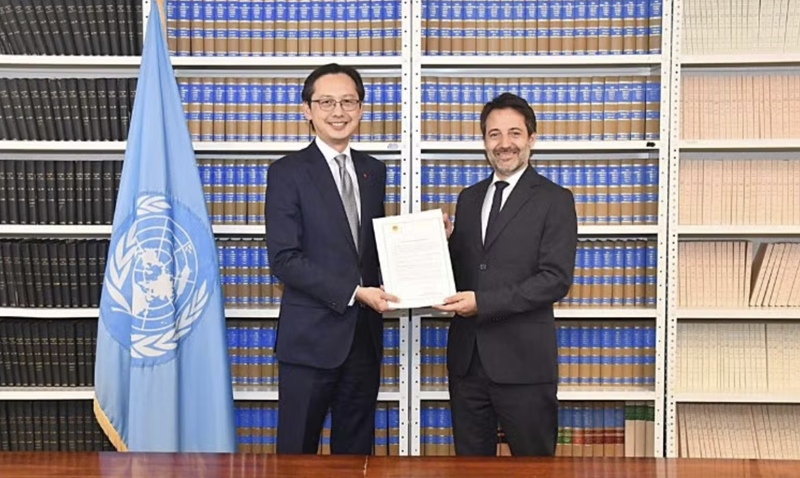
At the ceremony, OLA representatives received the instrument of ratification in the presence of the head of the U.N. Office on Drugs and Crime (UNODC) in New York.
    |
 |
|
Ambassador Do Hung Viet (left) deposits Vietnam's instrument of ratification for the U.N. Convention against Cybercrime with the U.N. Office of Legal Affairs at the U.N. headquarters in New York on April 17. (Photo: www.nhandan.vn) |
Addressing the event, Viet emphasized that hosting the convention signing ceremony in Hanoi and being among the first three countries to ratify the treaty reflects Vietnam’s wish and efforts to proactively and substantively contribute to the convention’s early entry into force, helping to strengthen international dialogue and cooperation in cybercrime combat while enhancing global cybersecurity.
The ambassador expressed his hope for swift ratification by other nations to translate commitments into action, utilizing this legal framework to address cyber challenges, maintain stability, promote sustainable development, and ensure rights, interests and shared prosperity for all.
In October 2025, Vietnam successfully hosted the signing ceremony and high-level conference in Hanoi under the theme "Countering Cybercrime – Sharing Responsibility – Securing Our Future". The event, organized in collaboration with the UN, drew leaders and high-ranking representatives from over 110 countries and international organizations. It set a new milestone in international cybersecurity cooperation and affirmed Vietnam’s growing international stature and prestige.
The U.N. Convention against Cybercrime is the first global legally binding instrument adopted by the U.N. to create a unified framework for the prevention, investigation, and prosecution of cyber-related offenses. It includes provisions on criminalizing cyberattacks, protecting critical information infrastructure, mechanisms for sharing electronic data and evidence, extradition, mutual legal assistance, and technical cooperation. Furthermore, it stresses the vital balance between cybersecurity and the protection of human rights, privacy, and national sovereignty.
Source: VNA