The plan aims to ensure the full and comprehensive enforcement of the Convention’s provisions, while gradually introducing electronic Apostille (e-Apostille) services. It also seeks to perfect the legal framework to facilitate the cross-border use of public documents between Vietnam and other member states, and clearly define responsibilities for relevant ministries and agencies to ensure coordinated and efficient implementation.
    |
 |
|
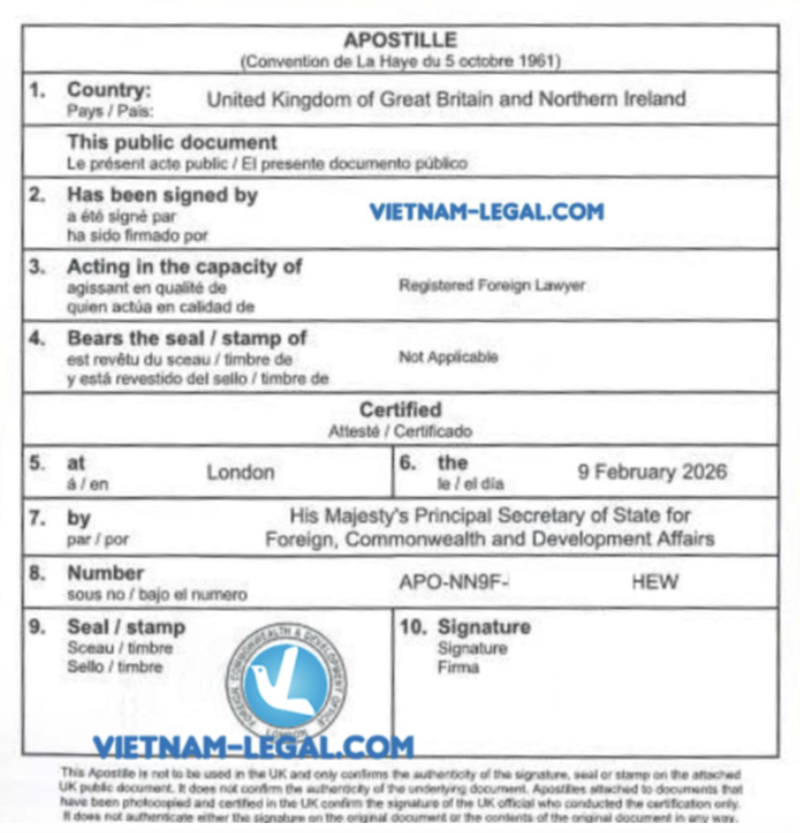
(Photo for illustration: vietnam-legal.com) |
Under the plan, the Ministry of Foreign Affairs will lead communication campaigns and develop guidance materials in coordination with ministries, local authorities and Vietnamese representative missions abroad. It will also draft a Government decree guiding the implementation of the Convention, to be submitted before June 15.
The ministry will establish a system for issuing and managing Apostille stamps, including an electronic database and inspection procedures. It will coordinate Vietnam’s participation in meetings of the Hague Conference on Private International Law, engage in information exchange and training programs, and handle verification requests from other member states.
Training programs will be organized for officials responsible for issuing and receiving public documents, including those tasked with recognizing foreign Apostilles.
To prevent fraud, the Ministry of Public Security will work with the Ministry of Foreign Affairs and other authorities to verify and address cases involving forged documents, and recommend preventive measures.
A centralized electronic Apostille database and internal software system will be developed to support issuance and management, including specimen seals, signatures and authentication data. Online public services will be provided through the National Public Service Portal, allowing electronic submission, processing and return of results in compliance with legal standards. The system is scheduled to become fully operational before September 11, 2026, when the Convention takes effect for Vietnam.
Vietnam has completed the key initial procedures for accession to the Apostille Convention, marking a significant step forward in administrative reform and international integration.
As one of the most widely adopted treaties of the Hague Conference, the Apostille Convention simplifies the authentication of public documents for use abroad. Instead of multiple layers of consular legalization, a single Apostille certificate issued by a competent authority in the originating country will suffice for recognition in other member states.
Once in force, the Convention is expected to bring tangible benefits to citizens and businesses by reducing administrative time and costs, facilitating cross-border mobility, education, employment and investment, and enhancing Vietnam’s overall business environment.
Source: VNA