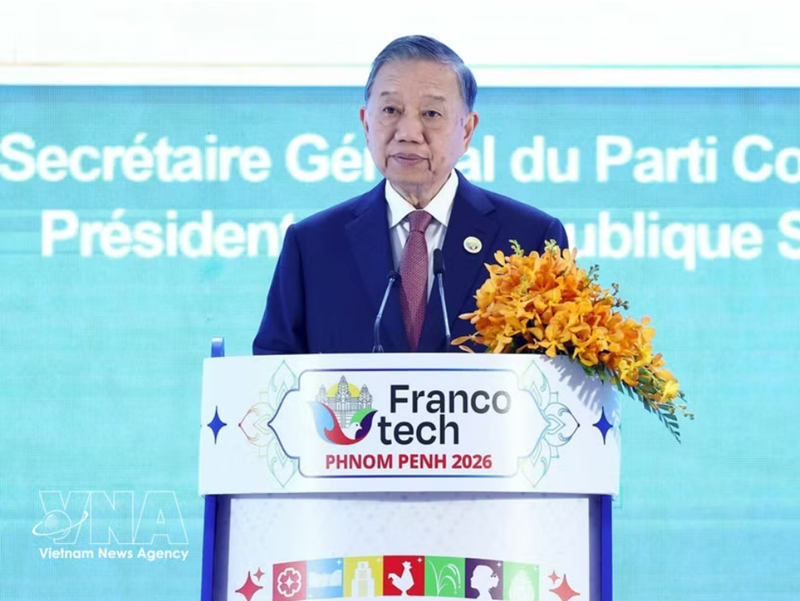
Addressing the 2026 Francophone Business and Innovation Forum (FrancoTech 2026) in Phnom Penh, Cambodia, the Vietnamese leader outlined opportunities for closer collaboration in science, technology and innovation. The forum was held as part of the 20th Francophonie Summit.
    |
 |
|
General Secretary of the Communist Party of Viet Nam Central Committee and State President To Lam addresses the FrancoTech 2026 in Phnom Penh, Cambodia, on November 15 as part of the 20th Francophonie Summit. (Photo: VNA) |
He reaffirmed Viet Nam's readiness to welcome investment in advanced technologies, research and development, and human resource training. Vietnamese enterprises, meanwhile, are prepared to explore new opportunities in digital trade and investment across Francophone markets. He also called for practical joint initiatives to strengthen scientific and technological links throughout the Francophone Community.
The remarks came against a backdrop of rapid changes in the global economy, where technological advances are increasingly reshaping production, business activities and governance. General Secretary and President To Lam pointed to the growing influence of big data, AI and other emerging technologies, which are transforming socio-economic life and creating new demands for policymakers and businesses.
The central challenge, he noted, is to ensure that these advances translate into development opportunities for countries and enterprises while bringing tangible improvements to people's lives.
For Francophone countries, the expansion of the digital economy offers opportunities to overcome geographical limitations, improve connectivity and reach new markets. The Vietnamese leader therefore urged the community to treat cooperation in science, technology and digital development as a key driver of growth rather than a separate area of engagement.
|
|
 |
|
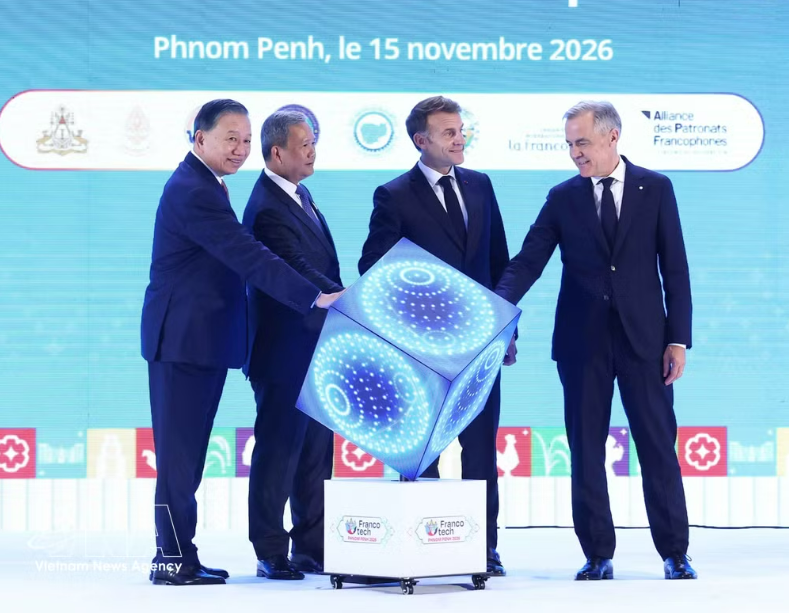
General Secretary of the Communist Party of Viet Nam Central Committee and State President To Lam and delegates launch the FrancoTech 2026. (Photo: VNA) |
Turning this vision into reality, he called on member countries to establish clear priorities and pursue specific cooperation initiatives. One proposal was to convene a Francophone ministerial conference on the digital economy, providing a forum for governments to coordinate policies, identify common priorities and develop an appropriate legal framework for cross-border digital trade and investment.
Innovation partnerships should also extend beyond institutional exchanges, he said. Greater knowledge sharing, joint research and technology transfer would help bring scientific discoveries closer to commercial application. He stressed the importance of ensuring that research outcomes are translated into practical solutions for manufacturing, business operations and everyday life.
To facilitate this process, General Secretary and President To Lam proposed a coordinated approach based on the "triple helix" model, bringing together government, research institutions and the business sector. Under this framework, public authorities, scientists and enterprises would work together throughout the innovation process, from research and technology development to practical deployment.
A memorandum of understanding signed by Viettel Cambodia (Metfone), the Agence Universitaire de la Francophonie (AUF) and Cambodia's Ministry of Education, Youth and Sport was highlighted as a practical illustration of this approach. The agreement focuses on cooperation in digital transformation in higher education, an area where closer institutional and business engagement can support the application of technology.
Human resource development was another priority in the Vietnamese leader's address. He called for training programs that better reflect the changing requirements of the digital economy, with particular attention to opportunities for young people and women. Stronger links between education and business needs, he said, would equip workers with the skills needed to adapt to technological change and participate more effectively in the digital economy.
|
|
 |
|
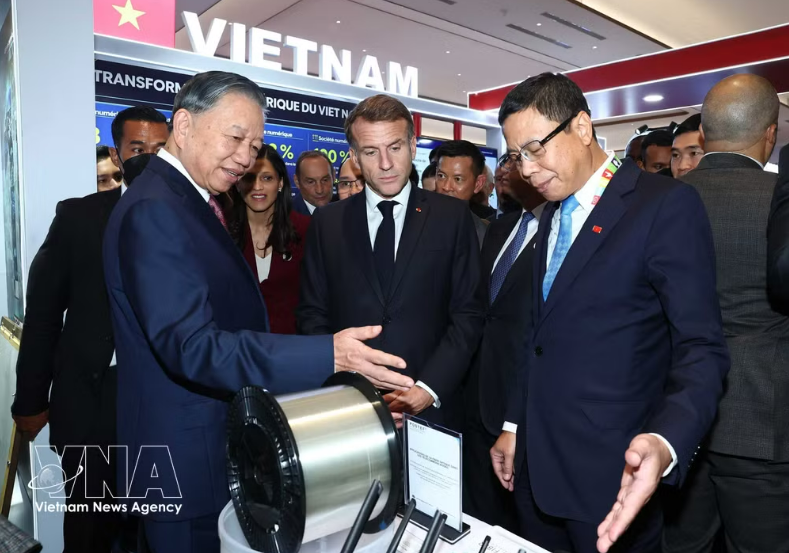
General Secretary of the Communist Party of Viet Nam Central Committee and State President To Lam and French President Emmanuel Macron visit the Vietnamese pavilion at the event (Photo: VNA) |
He also encouraged Francophone countries to build partnerships around sectors where their respective capabilities and competitive advantages complement one another. Potential areas include digital infrastructure, e-commerce ecosystems, electronic payment systems and digital solutions for business management.
On artificial intelligence, General Secretary and President To Lam emphasized the need for cooperation grounded in responsibility, inclusiveness and human-centered development. Such efforts would contribute to a dynamic and trustworthy AI ecosystem across the Francophone Community while helping narrow the digital divide and support sustainable growth.
Held under the theme "One Francophone Community, One Digital Future," FrancoTech 2026 was the forum's second edition, following its inaugural event in France in 2024.
The event brought together representatives from more than 90 governments and featured 200 exhibition booths. It attracted around 5,000 visitors, investors and representatives of innovation organizations, providing a platform for businesses and institutions to present technologies, explore partnerships and exchange ideas.
Viet Nam participated with a national pavilion, joined by major enterprises and organizations including Vietnam Airlines, Viettel Cambodia (Metfone), Military Commercial Joint Stock Bank (MB), the Joint Stock Commercial Bank for Investment and Development of Viet Nam (BIDV), MekongNet and the Viet Nam Posts and Telecommunications Group (VNPT).
During the event, General Secretary and President To Lam joined other Francophone leaders in visiting the exhibition area. At the Vietnamese national pavilion and booths operated by domestic companies, the leaders were briefed on products, services and ongoing projects in aviation, telecommunications, digital banking and regional connectivity.
Translated by Song Anh