He said he believes this visit carries substantial strategic significance for the comprehensive strategic partnership between Vietnam and Japan, particularly at a time when tensions in the Middle East continue to affect global stability.
The partnership was elevated in November 2023, from an “Extensive Strategic Partnership for Peace and Prosperity in Asia” to a “Comprehensive Strategic Partnership for Peace and Prosperity in Asia and the World.” This upgrade reflects the deepening and broadening of bilateral cooperation, especially in light of today's increasingly complex international environment, he remarked.
    |
 |
|
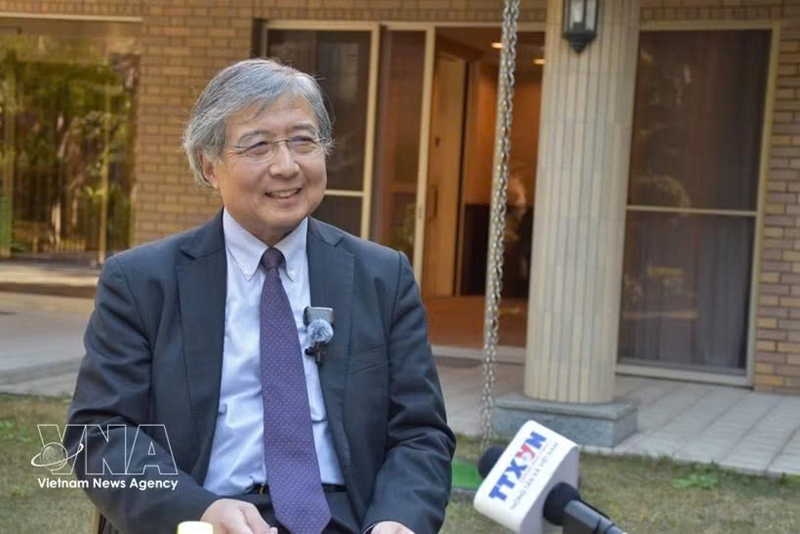
Toshiro Nishizawa, Senior Fellow, SCERU-GraSPP, University of Tokyo |
The 2023 Joint Statement emphasized respect for the U.N. Charter, adherence to international law, and mutual respect for each country’s political system, independence, sovereignty, and territorial integrity. The reaffirmation of these principles is both timely and essential.
According to him, with global instability and supply chain disruptions threatening the stable supply of energy and critical resources, it is vital for countries facing these challenges to work together. Under the comprehensive strategic partnership, Japan and Vietnam can collaborate not only bilaterally but also with other partners and international organizations to address these issues.
He held that Japan and Asian economies are deeply interdependent through supply chains. Japan relies heavily on Asian partners for essential medical supplies, including dialysis equipment and surgical materials. Any disruption in energy or critical resource supply chains would have severe socioeconomic consequences for both sides.
The “Asia Energy and Resource Supply Resilience Partnership,” announced at the AZEC+ Online Summit on April 15, represents a long term initiative to strengthen regional preparedness. It includes approximately 10 billion USD in financial cooperation for emergency responses, such as securing crude oil and petroleum products, and for structural measures like expanding regional oil stockpiles, diversifying energy sources, and securing critical minerals.
In the short term, he said Japan and Vietnam are expected to work together, guided by the principles of the comprehensive strategic partnership, to encourage diplomatic efforts toward a swift and lasting end to conflicts in the Middle East, which are at the root of current supply disruptions.
“Vietnam, with the world’s sixth largest reserves of rare earths, is an indispensable partner in the field of critical minerals,” he said, adding Japan’s cooperation in Vietnam’s transition from a “raw material exporter” to a country with advanced processing and higher value added industries would benefit both sides.
Regarding Vietnam’s role in the “Free and Open Indo-Pacific” (FOIP) strategy, Nishizawa said Vietnam has long upheld the principle of strategic autonomy, and it supports the core ideas of FOIP as long as the concept remains open and inclusive. This aligns well with Vietnam’s foreign policy of diversification and multilateralization, which seeks to avoid dependence on any single major power.
“FOIP is also consistent with the ASEAN Outlook on the Indo Pacific (AOIP), which emphasizes inclusiveness, openness, and ASEAN centrality. This alignment is essential to strengthening cooperation with Vietnam, a key ASEAN member,” he stated.
FOIP rests on three pillars: the promotion of the rule of law, freedom of navigation, and free trade; the pursuit of economic prosperity; and the maintenance of peace and stability.
“This visit provides an opportunity for both countries to reaffirm these principles. I expect Vietnam—while maintaining its strategic autonomy, to play an increasingly important role in advancing a Free and Open Indo Pacific,” he stressed.
Nishizawa said he expects progress in areas where Vietnam and Japan can leverage their respective strengths in a complementary manner.
This visit is an opportunity to accelerate bilateral projects already in the pipeline. These may include Japan’s decarbonization support under the Asia Zero Emission Community (AZEC); next generation ODA loans for green transition; semiconductor and AI human resource development; and urban railway and other infrastructure projects.
Advancing these initiatives would deliver tangible benefits for both countries, he noted.
According to him, science and technology cooperation between Japan and Vietnam will likely center on advanced human resource development and joint research in semiconductors and artificial intelligence.
Beyond that, he emphasized strong potential for collaboration in materials science, environmental and decarbonization technologies, medical and biotechnology fields, and digital governance. Joint laboratories and pilot projects involving research institutes, universities, and private companies would be particularly effective.
A “triad” approach, integrating research, education, and industrialization, aligned with both countries’ digital and green transformation strategies will be key to achieving sustainable outcomes, he stated.
He further said that during a recent visit to the Tokyo Office of a Vietnamese IT company, he was impressed by its remarkable growth over the past two decades. Built on research, development, and human resource training, the company now provides advanced services to Japanese clients. Its mission of connecting Vietnam and Japan on the ground while contributing to a sustainable society offers a compelling model for future cooperation.
Source: VNA