The hybrid forum brought together more than 80 delegates from both sides, including policymakers and representatives of tourism associations, training institutions, travel firms, airlines, and related organizations. Over 40 participants attended in person at the embassy, while the rest joined online, marking the first in-depth tourism forum between the two countries to adopt a combined format.
Opening the event, Ambassador Nguyen Thi Minh Nguyet underscored its significance as Vietnam and Bulgaria elevated ties to a Strategic Partnership in October 2025, while implementing their tourism cooperation program for 2024–2026.
    |
 |
|
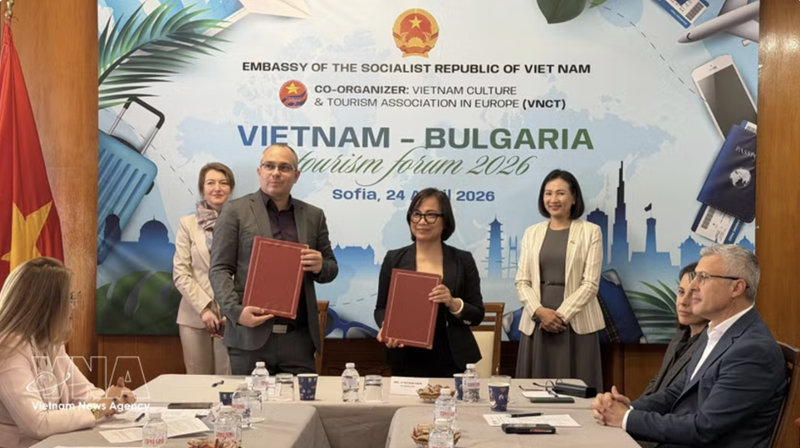
The Vietnam Cultural and Tourism Association in Europe (VNCT) and the Bulgarian Union of Balneology and SPA Tourism sign a memorandum of understanding to boost information exchange, product development, and joint familiarization trips. |
She described tourism as not only a key economic sector but also a bridge for cultural exchange and mutual understanding.
Vietnam welcomed around 21.5 million international arrivals in 2025, thanks in part to more open visa policies, including visa exemptions for Bulgarian citizens. The country is also diversifying tourism products, advancing green tourism, and accelerating digital transformation. Against this backdrop, the ambassador called for stronger joint promotion, enhanced air connectivity, and closer cooperation in human resources development.
According to Savina Nedyalkova from Bulgaria’s Ministry of Tourism, two-way travel has shown positive growth in recent years. Bulgaria is increasingly appealing to Vietnamese tourists with its diverse landscapes, rich heritage, and strengths in spa and wellness tourism. Meanwhile, demand among Bulgarian travelers for long-haul destinations such as Vietnam is also rising, particularly during winter.
Discussions at the forum highlighted a growing shift of Eastern European tourists towards Southeast Asia amid global uncertainties, with Vietnam emerging as a competitive destination thanks to its affordability, diverse resources, and distinctive cultural experiences. Experts suggested that Vietnam should further “emotionalize” its tourism products by combining cultural depth with high-quality services to better attract Bulgarian visitors.
Air connectivity remains a major bottleneck. Currently, travelers must transit through hubs such as Doha, Dubai, or Istanbul, increasing travel time and costs. However, seasonal charter flights, particularly in winter, were seen as a feasible solution if airlines and tour operators coordinate closely.
In terms of human resources, Vietnamese institutions are enhancing language training, professional skills, and cultural knowledge while expanding international partnerships. Bulgarian representatives expressed interest in internship programs, especially in high-end hospitality.
A virtual business-to-business (B2B) matchmaking session enabled companies from both sides to exchange information and explore partnerships, with several concrete connections established. Notably, the VNCT and the Bulgarian Union of Balneology and SPA Tourism signed a memorandum of understanding to boost information exchange, product development, and joint familiarization trips.
Building on earlier promotion efforts, including Vietnam’s presence at Holiday Expo in Sofia in late 2025, the forum is expected to pave the way for stronger tourism cooperation, contributing to the growing Strategic Partnership between the two countries.
Source: VNA