All 34 provinces and cities have completed the administrative restructuring under the Politburo and Government’s orders, she said.
    |
 |
|
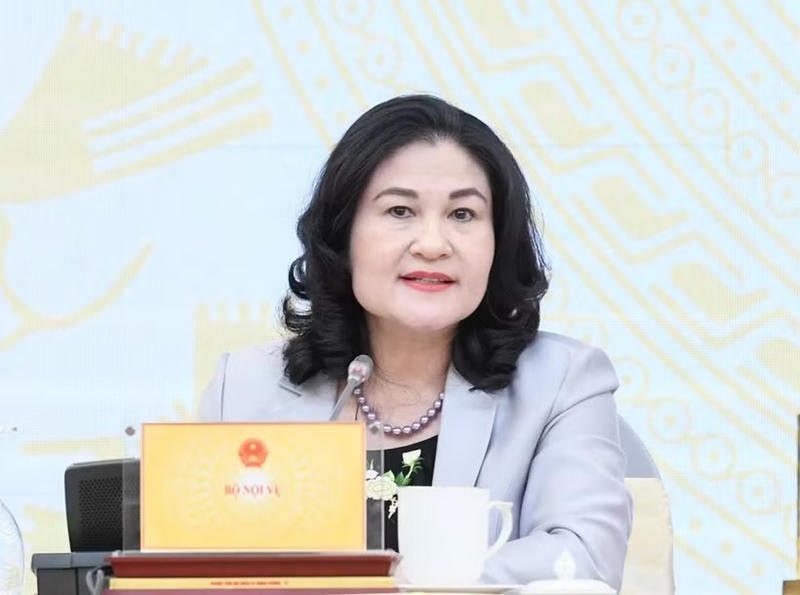
Deputy Minister of Home Affairs Nguyen Thi Ha at the Government’s regular July press briefing (Photo: thanhtra.com.vn) |
The process was carried out in a serious, synchronous, transparent and democratic manner, securing broad consensus among officials, Party members and the public while keeping the political environment stable and neighborhoods safe.
The shake-up didn’t just cut numbers but also created larger management units. More villages and residential groups now meet regulatory standards, and the problem of tiny, scattered clusters has been largely fixed, Ha noted.
At the same time, it left untouched communities with distinct historical, cultural, ethnic and religious identities, defense-security sensitivities, and those in unique geographic areas.
Localities also merged Party organizations, Vietnam Fatherland Front chapters and socio-political bodies. Part-time civil servants at the commune, village and cluster levels had their benefits and employment policies settled in a timely and coordinated way.
Offices, records and equipment were handed over so that the newly formed villages and residential groups could begin work right away, without disrupting grassroots political systems or daily life, according to the official.
The entire reorganization hit its targets and timeline as laid out in the Politburo’s Conclusion 34-KL/TW. It made grassroots apparatus leaner, lifted the efficiency of the political system and reinforced communities’ ability to govern themselves.
It also restructured and upgraded part-time grassroots staff, prioritizing those with credibility, competence, strong qualifications and digital skills to better handle the demands of local governance in the new period, Ha said.
Source: VNA