Under Decision No.1111/QD-BNNMT issued by the Ministry of Agriculture and Environment, the new process regulates the inspection and supervision of foreign vessels engaged in fishing, transport or transshipment of seafood when calling at Vietnamese ports for import, temporary import for re-export, transit or transshipment activities.
    |
 |
|
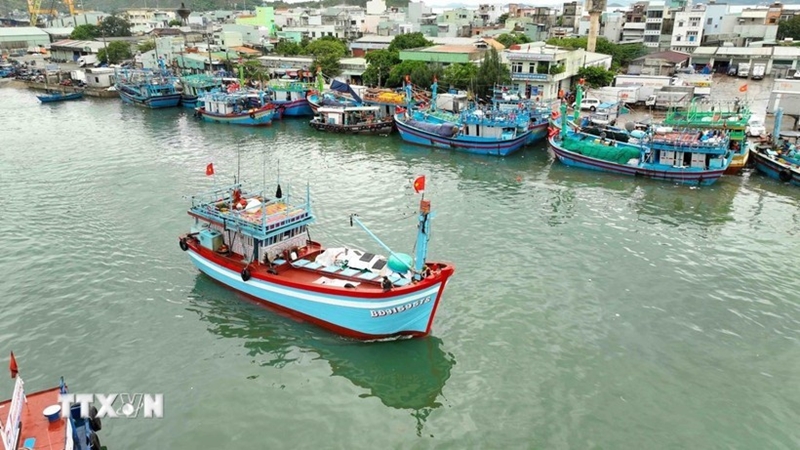
Vietnam issues new control procedures to tackle IUU fishing. (Photo for illustration) |
The regulation aligns with the FAO’s Agreement on Port State Measures (PSMA), which seeks to prevent illegally caught seafood from entering global supply chains.
A key feature of the new framework is a nine-step inspection and verification process designed to strengthen monitoring from pre-arrival to post-inspection reporting.
Under the rules, vessel owners or operators must submit advance notification at least 72 hours before arrival to the Directorate of Fisheries and Fisheries Surveillance. Required documents include vessel registration, fishing or transshipment licenses, voyage reports, cargo hold layout and relevant permits such as CITES certificates, provided in Vietnamese or English.
Within 72 hours of receiving complete documentation, authorities will conduct a thorough review, including checks against IUU fishing blacklists, verification of vessel specifications and ownership, and validation of routes using vessel monitoring systems (VMS) or automatic identification systems (AIS).
Vessels suspected of violations may be denied entry, with notifications sent to ship owners, port authorities, the flag state, relevant regional fisheries organizations and the FAO. Compliant vessels will be granted permission to dock.
Upon arrival, an inspection team will be established to conduct onboard checks. Inspectors will verify documentation, examine fishing gear, and compare declared cargo with actual volumes unloaded.
Findings will be recorded in official reports signed by both inspectors and the vessel captain.
If no violations are found, vessels will be allowed to unload cargo in accordance with regulations. In cases of fishing breaches such as invalid licenses, illegal fishing practices or exceeding quotas, authorities may refuse unloading and require vessels to leave Vietnamese waters, except in humanitarian situations.
Inspection results will be reported to national PSMA focal points and uploaded to the FAO’s Global Information Exchange System (GIES), while relevant information will be shared with flag states and international organizations.
The ministry emphasized that ship owners, captains and seafood importers must fully comply with inspection requirements and provide all necessary documentation to ensure transparency and traceability throughout the supply chain.
The new regulation, effective from March 31, 2026, replaces Decision 617/QD-BNNMT issued in February.
Source: VNA