Entering 2026, Standard Chartered expects Vietnam to sustain its growth momentum, while warning that greater caution is needed amidst existing risks.
    |
 |
|
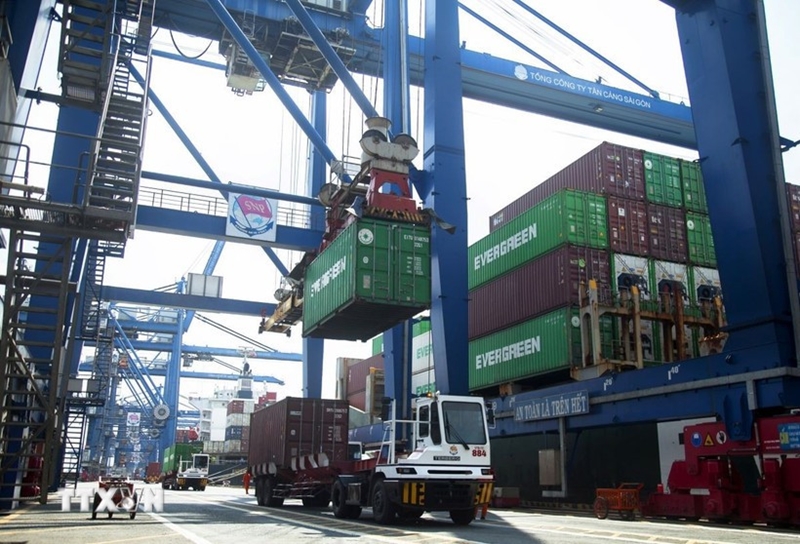
A view of Cat Lai Port in Ho Chi Minh City |
According to the Chief Executive Officer of Standard Chartered Vietnam, Nguyen Thuy Hanh, trade and tariff issues continue to rank among the top risks. Ongoing negotiations between Vietnam and the U.S. administration on rules of origin and transhipment are expected to have a significant impact on trade prospects this year. The outcomes of these talks will not only affect exports but also influence investor sentiment and foreign capital flows.
On monetary policy, Hanh praised the State Bank of Vietnam’s flexible and timely management in 2025, which helped maintain positive credit growth. This is seen as a crucial foundation enabling businesses to access capital, sustain production and business activities, and support economic growth in 2026.
From a macroeconomic perspective, Tim Leelahaphan, Senior Economist for Vietnam and Thailand at Standard Chartered, said the bank’s global research team remains optimistic about Vietnam’s economic prospects. Standard Chartered forecasts Vietnam’s GDP growth at around 7.2% in 2026. Although this figure is below the Government’s 10% target, Leelahaphan stressed that 7.2% remains a very strong growth rate, particularly given Vietnam’s robust expansion over many consecutive years.
Notably, in Standard Chartered’s regional outlooks, Vietnam continues to be assessed as the fastest-growing economy in Asia, outperforming many others amid a general slowdown in regional growth.
Standard Chartered expects Vietnam’s economic growth to moderate in the first half of the year before rebounding more clearly in the second half. GDP growth is projected at about 6.5% in the first half, accelerating to around 8% in the latter half, bringing full-year growth to 7.2%.
Explaining the cautious short-term approach, Leelahaphan noted that growth prospects in the early months of the year remain subject to external uncertainty, particularly the progress of tariff negotiations between the Vietnamese Government and the U.S. administration. Under Standard Chartered’s base scenario, these talks are expected to conclude around mid-year. Until concrete outcomes emerge, trade-related risks will continue to weigh on market sentiment and growth prospects.
Several economic indicators in the fourth quarter of 2025 suggested a slowdown in economic expansion. While exports continued to gain momentum towards year-end, manufacturing, retail sales and domestic consumption, key pillars of growth, remained positive but no longer posted the strong increases seen in earlier quarters, even flattening in the final quarter.
Regarding growth drivers, Standard Chartered’s experts said manufacturing remains the main magnet for foreign direct investment (FDI) and a core pillar of Vietnam’s economy. Recently, however, rising FDI inflows into the real estate sector have also been observed, alongside early signs of recovery in this market.
On capital flows, the outlook appears mixed. While disbursed FDI grew strongly last year, newly registered FDI showed signs of slowing, largely as investors adopt a wait-and-see stance pending the outcome of Vietnam–U.S. trade negotiations. Once clearer and more favorable trade agreements are reached, newly registered FDI is expected to rebound, further strengthening medium-term growth prospects.
In terms of monetary policy, Standard Chartered believes that despite certain market fluctuations, the Government and the State Bank of Vietnam will remain committed to maintaining stable interest rates. Such stability is viewed as a prerequisite for promoting economic development, reducing concerns about sharp or disruptive interest rate movements in 2026.
Despite global economic turbulence in 2025, marked by prolonged geopolitical tensions and rising trade pressures, particularly from U.S. tariff and trade policies, Vietnam concluded the year with impressive results. GDP grew by 8.02%, surpassing all government targets and underscoring the effectiveness of policy management as well as the resilience and adaptability of the Vietnamese economy to external shocks.
Source: VNA