Over 470 hectares of land and about 492,000 sq.m of factory space were leased during the year, according to the Ho Chi Minh City Export Processing and Industrial Zones Authority (HEPZA).
    |
 |
|
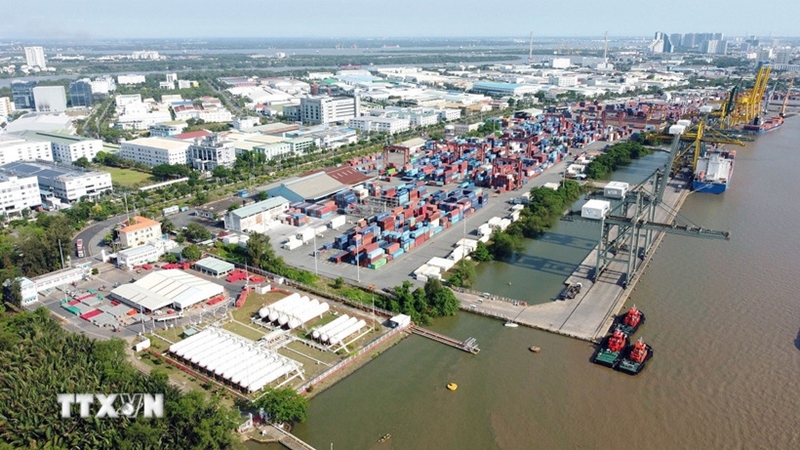
A corner of Tan Thuan Export Processing Zone in HCM City, seen from the Sai Gon River |
Foreign direct investment (FDI) reached more than 3.39 billion USD, down 7.09% from 2024. Of this, 210 new projects were licensed with registered capital totaling 1.93 billion USD, a decline of 44.32%. Meanwhile, additional capital registered by 179 existing projects surged 74.53% to 1.99 billion USD.
Hong Kong (China) topped the list of countries and territories by number of newly licensed projects, with 66 projects worth nearly 392 million USD. It was followed by mainland China, with 36 projects totaling more than 247 million USD. Singapore, with 24 projects, registered the largest amount of new investment capital, exceeding 415 million USD.
Sectors attracting the most foreign investment included mechanical engineering, with 52 projects worth more than 258.5 million USD; plastics and rubber, with 22 projects totaling over 80 million USD; and electronics, with 21 projects worth more than 210 million USD.
Domestic investment reached more than 48 trillion VND (over 1.9 billion USD), up 16.96% year-on-year. This comprised 99 new projects worth over 33.6 trillion VND and 52 projects registering additional capital totaling 14.3 trillion VND.
HEPZA reported a positive structural shift in FDI inflows, with capital increasingly directed towards priority industries such as mechanical engineering, which accounted for 18.5% of total FDI, and chemicals, which represented 15.2%. Domestic investment also maintained strong momentum, rising nearly 17% from 2024.
Of the 99 newly licensed domestic projects, the real estate sector accounted for the largest share, representing 56.2% of total capital, or 18.9 trillion VND. Mechanical engineering and food processing followed, accounting for 9.59% and 8.21%, respectively.
HEPZA Director Bui Minh Tri said exceeding the 2025 investment target as early as mid-December created an important foundation for economic breakthroughs in the coming period. In 2026, HEPZA will focus on strengthening business linkages and improving the timely provision of information to better support enterprises and workers.
The authority also plans to develop and implement a scheme on industrial and export processing zones, restructure key industries in line with high-tech development, and build eco-industrial parks and new-generation smart zones once approved by the municipal People’s Committee. These efforts are expected to stimulate growth while fostering stable and harmonious labor relations in key economic areas.
Source: VNA