However, behind this impressive figure lies a structural vulnerability: Many key export commodities are facing unstable raw material supplies, raising concerns about the sustainability of growth in the medium and long term.
    |
 |
|
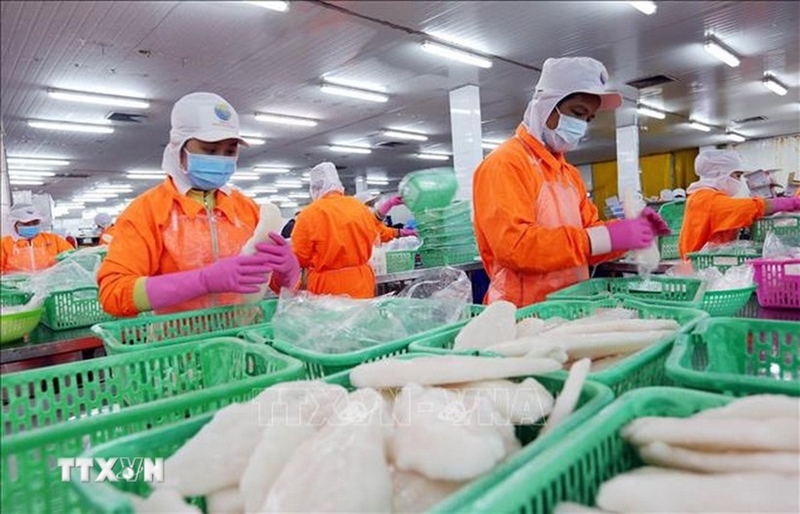
Aquatic product processing for export |
According to Secretary General of the Vietnam Pepper and Spice Association Le Viet Anh, pepper remained Vietnam’s leading spice export in 2025, with shipments exceeding 247,000 tons, accounting for 59.3% of total spice export volume. Export revenue reached 1.66 billion USD, out of total spice exports of 2.1 billion USD.
Yet Vietnam also imported more than 42,000 tons of pepper, worth 266.2 million USD, up 16.2% in volume and 51.1% in value compared to 2024. While this reflects Vietnam’s central role in pepper processing and re-export, it also highlights a growing shortfall in domestic supply amidst sustained global demand.
Viet Anh warned that the 2026 pepper harvest is expected to face adverse weather conditions and plant diseases, particularly in ageing plantations with limited technical investment. Preliminary assessments suggest output could decline by 15%–20% compared to 2025, making it increasingly urgent to maintain and expand supply to meet rising international demand.
Similar challenges persist in the cashew industry, which has long grappled with a severe shortage of raw materials. The Vietnam Cashew Association noted that domestic supply currently meets only just over 10% of demand, forcing the industry to import nearly 90% of raw cashew nuts.
In 2025, Vietnam’s cashew exports hit a record 5.2 billion USD, but raw material imports surged to around 4.5 billion USD. Most imports come from Cambodia and Côte d’Ivoire, both of which are rapidly shifting towards deep processing and gradually reducing exports of raw nuts.
Côte d’Ivoire alone now has 37 processing facilities with a combined designed capacity of about 830,000 tons, and it aims to process 50% of its cashew output domestically by 2030 through new investment projects. This trend poses a real risk of supply disruption for Vietnam’s cashew industry, potentially undermining its competitiveness and its position as the world’s leading cashew exporter.
The coconut sector also posted strong growth in 2025, overtaking dragon fruit to become the second-largest fruit and vegetable export, with revenue rising 36.6% to nearly 534 million USD. However, the Vietnam Coconut Association pointed to unstable supply as a key constraint on sustainable development, with some exporters forced to import coconuts to fulfil contracts, eroding profits and, at times, damaging credibility due to delayed deliveries.
The association Chairwoman Nguyen Thi Kim Thanh stressed the importance of improving planting materials to enhance productivity and quality. High-quality varieties can reduce pest and disease risks by 40%–60%, stabilize yields and lower production costs even amidst climate volatility. She also highlighted the need for sustainable farming practices, integrated pest management and safe plant protection measures to meet growing demand for green, traceable products.
Experience from the pepper, cashew and coconut sectors shows that reliance on domestic raw materials for production is no longer an issue for individual enterprises alone, but a strategic challenge for the entire agricultural sector. As external supply becomes increasingly volatile, proactive policies are needed, from planning raw material zones and encouraging long-term linkages to supporting credit, investment in varieties, technology and on-site processing. With better control of inputs, Vietnam’s agricultural exports can strengthen their quality, cost efficiency and global market position.
Source: VNA