A shipment of 24 tons of Vietnamese tilapia is expected to dock at Brazil’s Port of Santos on December 17, marking not only a transaction but also a strategic milestone for the country’s fishery sector.
    |
 |
|
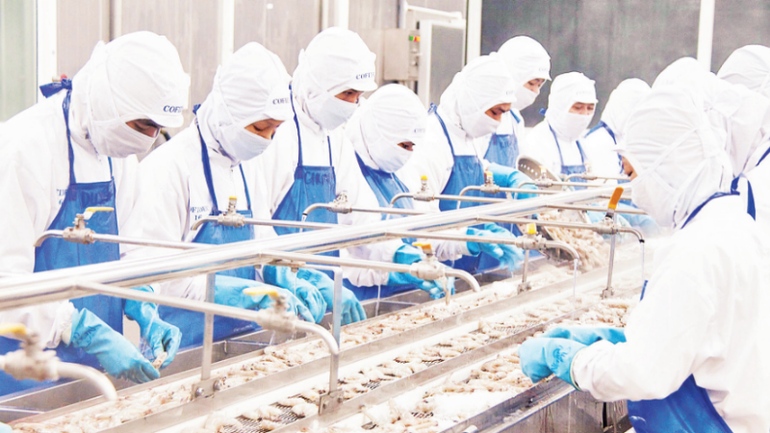
Workers process frozen shrimp for export at the Coastal Fisheries Development Company (COFIDEC), Ho Chi Minh City. (Photo: nhandan.vn) |
This is the first batch of a 700-tonne order placed by Brazil’s JBS Group – the largest food corporation in South America – from Nam Viet Corporation (Navico) in An Giang province. According to Navico General Director Doan Toi, winning the trust of major global corporations like JBS reflects the strong processing capacity, product quality and growing reputation of Vietnamese companies in the world seafood map.
Vietnamese Ambassador to Brazil Bui Van Nghi said the 700-tonne tilapia export deal represents progress in bilateral economic cooperation, following the two countries’ agreement to open their farm produce markets.
Vietnam will import Brazilian beef, while Brazil opens its market to Vietnamese tilapia, tra and basa fish. As traditional markets show increasing unpredictability, venturing into new destinations is essential to maintain stable growth.
The first shipment of tilapia to Brazil is considered an important “breakthrough step” that could unlock wider access to the South American market. As the region’s largest economy and a key member of Mercosur, Brazil could serve as a gateway for Vietnamese seafood to enter the region. The prospects are even brighter as the Ministry of Industry and Trade expects to launch negotiations for a Vietnam - Mercosur Free Trade Agreement soon.
According to tuna market expert Nguyen Ha of the Vietnam Association of Seafood Exporters and Producers (VASEP), Swedish consumers place high value on health, environmental certification, legal fishing practices and supply-chain transparency. Sustainability, therefore, has become a competitive advantage.
Vietnam’s tuna exports to Sweden have been rising rapidly, reaching nearly 4.7 million USD in the first ten months of 2025, almost double the total export value in 2019. Meeting Sweden’s strict standards also provides Vietnamese exporters a strong “passport of credibility” to expand into similar markets such as Norway, Denmark and Finland.
This demonstrates Vietnamese firms’ transformation from selling raw materials to offering branded, sustainable product solutions - an essential shift for the future of the tuna industry.
Meanwhile, Vietnamese tra fish has recently made its debut in sushi served at Japan’s renowned Kura Sushi chain. Japanese diners have praised the product’s delicate texture and balanced flavor – a remarkable breakthrough given Japan’s long-standing preference for wild-caught seafood over imported freshwater fish.
This milestone not only signals cultural integration but also affirms that Vietnamese tra meets the stringent food-safety and quality requirements of one of the world’s most demanding markets.
Alongside tra fish, surimi (a type of minced fish meat that has been processed and refined) has emerged as another growth driver. In the first ten months of 2025, Vietnam’s surimi and fish cake exports surged to 292 million USD, up 24% year-on-year, driven by recovering demand in the Republic of Korea, Thailand, China and especially the E.U.
Despite geopolitical tensions, trade barriers and severe natural disasters affecting aquaculture and fishing, Vietnam’s seafood sector has remained resilient, with export turnover on track to hit a record 11.3 billion USD in 2025.
By exploring new markets, diversifying products and prioritizing sustainability standards, Vietnamese aquatic products have laid the groundwork for long-term expansion including early steps to build investment partnerships in emerging markets such as Algeria and Cuba.
Source: VNA