The event was part of a series of activities marking the 50th anniversary of Saigon–Gia Dinh officially being named Ho Chi Minh City (July 2, 1976–2026).
    |
 |
|
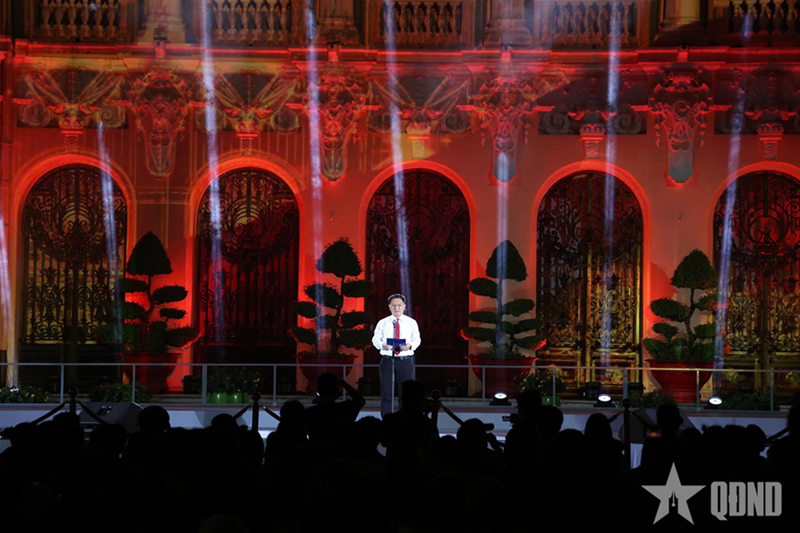
Vice Chairman of the Ho Chi Minh City People's Committee Nguyen Manh Cuong delivers the opening remarks. |
Speaking at the opening ceremony, Vice Chairman of the Ho Chi Minh City People's Committee Nguyen Manh Cuong described July 2, 1976 as a historic milestone for the city. On that day, Saigon–Gia Dinh was officially named after President Ho Chi Minh, the beloved leader, who devoted his entire life to the cause of national liberation, reunification and the well-being of the Vietnamese people.
He said that bearing President Ho Chi Minh's name is not only a great honor but also a lasting source of inspiration for the city to continue striving to meet the expectations of the nation. More than an administrative decision or a change of place name, it reflected the trust, responsibility and aspirations of the Party, the State and the Vietnamese people to a city that has consistently led the country's development.
Through the art performance and 3D mapping show under the theme "Innovation and Integration," Ho Chi Minh City conveyed a message to people across Vietnam, international friends and visitors that the city named after President Ho Chi Minh remains deeply rooted in its revolutionary traditions while embracing compassion, dynamism, innovation, international integration and sustainable development. It is a city that cherishes its past, remains steadfast in the present and looks confidently toward the future.
|
|
 |
|
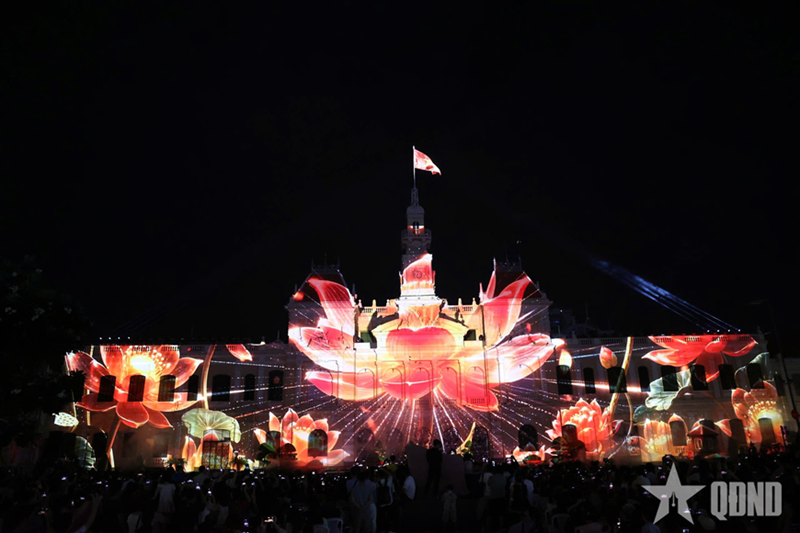
The 3D mapping performance |
Combining vivid imagery, music and state-of-the-art lighting effects, the program recreated key milestones in the city's history and development. Audiences were taken on a visual journey from the heroic years of revolutionary struggle to the transformation of Ho Chi Minh City into Vietnam's leading economic and cultural hub. Through modern digital technology, the city's historical, cultural and revolutionary heritage was brought to life in a compelling and accessible way, creating a strong impact on the public.
Pham Van Binh, a resident of Nhieu Loc Ward in Ho Chi Minh City, said he was particularly impressed by the vivid presentation of Vietnam's history and national symbols.
"What impressed me most was how vividly the country's history and iconic symbols were presented. In a short time, viewers could clearly grasp the city's development and appreciate many of Vietnam's symbolic landmarks. It was a visual, accessible and highly persuasive way of communicating history," he said.
|
|
 |
|
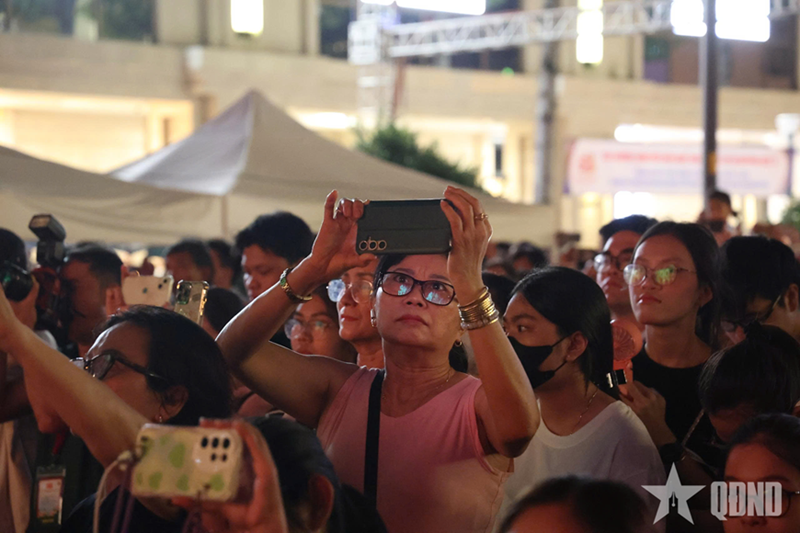
Large crowds gather to enjoy the program. |
Beyond providing a memorable artistic experience, the event also reflected a new approach to promoting and educating the public about Vietnam's revolutionary traditions. By incorporating advanced technology into cultural and political activities, the program revitalized historical values through the language of the digital age, fostering patriotism, national pride and affection for Ho Chi Minh City among the public, particularly younger generations.
Translated by Tran Hoai