The article coincides with General Secretary of CPV Central Committee To Lam’s two-day state visit to Vientiane starting on December 1 to attend celebrations for Laos’ 50th National Day and co-chair a high-level meeting between the CPV and the Lao People’s Revolutionary Party (LPRP).
    |
 |
|
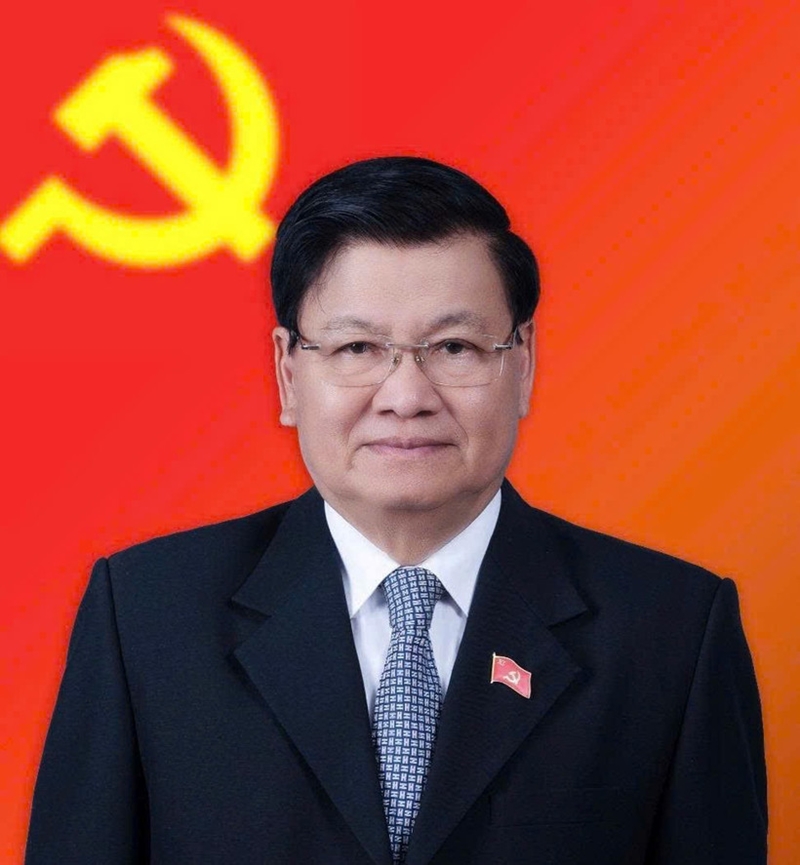
Party General Secretary and President of Laos Thongloun Sisoulith |
Thongloun traced Vietnam’s modern history to the 1930 founding of the Indochinese Communist Party, now the CPV, by great President Ho Chi Minh, describing it as decisive turning point for the destiny of three Indochinese peoples, particularly those in Vietnam.
Under the CPV’s leadership, the Vietnamese people achieved extraordinary and historic victories in the struggle for national salvation against French colonialism, culminating in the triumph of the August Revolution and the establishment of the Democratic Republic of Vietnam on September 2, 1945. The CPV then continued to lead the struggle for the liberation of the South and national reunification in 1975, and the nation was subsequently renamed the Socialist Republic of Vietnam, he wrote.
Since national reunification, the CPV has remained the solid core of leadership, steering the country through the 1986 Doi Moi (renewal) process that shifted Vietnam from central planning to a socialist-oriented market economy, opening a new era of national renewal, development, and integration, he added.
Retracing the country’s journey over the past 80 years, particularly the 40 years of Doi Moi, he said it is evident that Vietnam has achieved profound and comprehensive accomplishments of historic significance. The country has secured political stability, robust national defense-security, social safety and order, rapid and sustainable economic growth, rising living standards, deeper external relations and global integration, elevating the role and position of both the CPV and the nation on global and regional platforms.
Since embarking on Doi Moi, Vietnam has transformed from a war-torn and economically constrained nation into a dynamic developing country with middle-income status. In 2024, it became one of the world’s 32 largest economies and one of the top 20 countries for trade and foreign direct investment. Its cultural and social development, rich in national identity, has become a major driver of national progress. Notably, the Vietnamese Party and Government have vigorously advanced comprehensive reforms and taken firm measures against negative phenomena in state governance, achieving major results widely supported by the public and hailed by the international community. Efforts to streamline and enhance the efficiency of political apparatus have provided fresh momentum for national governance. Vietnam has also made remarkable strides in modernization and digital transformation, laying the groundwork for advancing toward socialism.
These successes, he wrote, affirm the CPV’s wise, correct, and steadfast leadership and serve as an invaluable source of inspiration and encouragement for the Lao Party, State, and people in advancing their own national renewal, defense, and development in the new period.
He expressed firm belief that under the CPV’s insightful leadership led by General Secretary Lam, Vietnam would fulfill the 13th National Party Congress’s resolutions and move toward the 14th National Party Congress which marks an important transition into a new era of development, prosperity and national strength.
Alongside these 80-year historic and comprehensive achievements, he was deeply proud of the great bilateral friendship, special solidarity, and comprehensive cooperation built by Presidents Ho Chi Minh, Kaysone Phomvihane, and Souphanouvong, and tempered through decades of revolutionary struggle. This noble relationship, he said, has become a pure and faithful bond, an invaluable shared legacy, and a vital factor for the existence, development, and success of both nations.
Today, the Laos - Vietnam relationship continues to be nurtured, fostered, and deepened across various fields, delivering tangible benefits to their people. Political ties remain close and trusted, with regular visits and exchanges, while joint statements and agreements by high-ranking Party and State leaders are progressing effectively. Cooperation in national defense, security, and foreign affairs grows increasingly close and effective, contributing to political stability and national security in both countries. Economic, trade, and investment ties continue to see positive strides. Collaboration in culture, education, sci-tech, and other fields is yielding encouraging results.
He expressed profound gratitude to the Vietnamese Party, State, and fraternal people for their invaluable, wholehearted, effective, and timely support to the Lao revolution over the past years.
The Lao Party, State, and people will continue working closely with Vietnamese counterparts to preserve and uphold this rare and precious relationship, ensuring it remains strong and fruitful for the benefit of both nations and for peace, stability, and development in the region and the world, he said.
He concluded by wishing the great friendship, special solidarity, and comprehensive cooperation between the Lao and Vietnamese Parties, States, and people everlasting.
Source: VNA