Sianipar said Vietnam appears relatively well prepared to cope with global energy fluctuations. Drawing on his experience working in Vietnam, he observed that Vietnam demonstrates strong autonomy in energy policymaking and maintains flexibility in energy management.
    |
 |
|
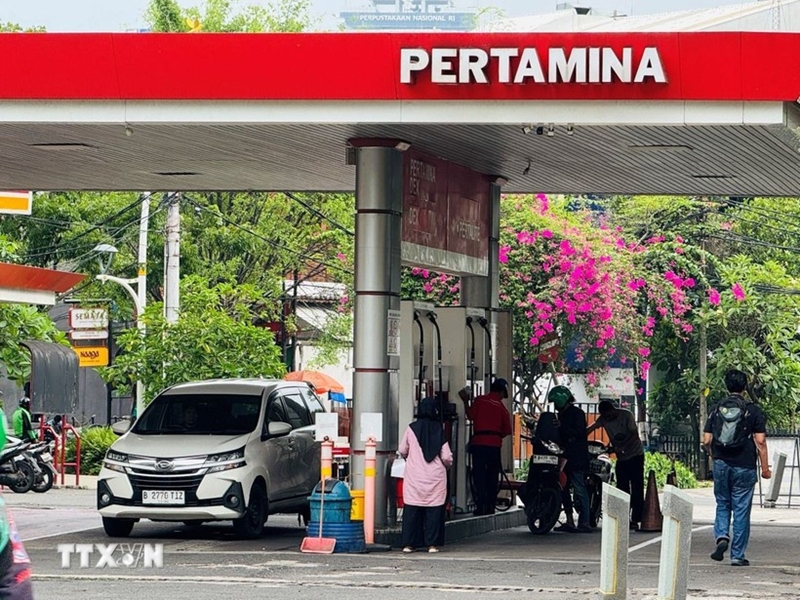
A petrol station in Indonesia |
He suggested Vietnam continue pursuing two key approaches: strengthening domestic energy self-reliance and expanding cooperation within the Association of Southeast Asian Nations (ASEAN).
From a strategic perspective, he emphasized that ASEAN should reinforce internal solidarity and enhance its collective role amid growing global uncertainty. Closer coordination among energy-capable members, particularly Vietnam and Indonesia, would strengthen the bloc’s international bargaining power and help member states better navigate global energy market volatility.
Sianipar expressed confidence that Vietnam has sufficient capacity to address current challenges and may, in some aspects, be even better prepared than Indonesia.
He said that amid escalating tensions in the Middle East and disruptions to global oil and gas supplies through the Strait of Hormuz, Indonesia, Southeast Asia’s largest economy, is striving to maintain domestic stability while accelerating a transition towards a more sustainable and self-reliant energy system.
The Indonesian Government has introduced several measures, beginning with energy-saving efforts in the public sector. President Prabowo Subianto has directed agencies to enhance energy efficiency, including adopting remote working arrangements in some offices to reduce fuel consumption and operating costs. The government has also maintained fuel subsidies to protect households and stabilize the macro-economy. Should tensions persist and oil prices continue rising sharply, Indonesia may adjust subsidy levels or retail prices to ease fiscal pressure while avoiding major economic shocks.
According to Sianipar, these measures may help stabilize the situation in the short term but do not address Indonesia’s core vulnerability, dependence on external energy supplies, highlighting the need for greater long-term energy self-sufficiency.
Indonesia plans to accelerate the development of non-fossil energy sources, including renewable and alternative energy, to gradually reduce reliance on imported fossil fuels. He noted that this strategic direction had been defined before the Middle East conflict, with recent developments only reinforcing its urgency. The government has mapped out a road-map to increase the share of renewables while carefully balancing energy transition goals with socio-economic stability, avoiding rushed decisions during periods of crisis.
Source: VNA