Enriched by the alluvial deposits of the Mekong River, the region stands out for its dense canal network, year-round fruit orchards, biodiversity-rich national parks, and vibrant folk festivals. These are invaluable assets for developing diverse tourism offerings, from orchard-based eco-tourism and river experiences to cultural, festival, resort and nature conservation tourism.
Following administrative restructuring, the former 13 localities have been consolidated into five new units (Can Tho, Vinh Long, Dong Thap, An Giang and Ca Mau), opening up transformative opportunities to reconfigure regional tourism. This creates integrated spaces linking mountains, forests, plains, waterways, coastal areas and islands.
    |
 |
|
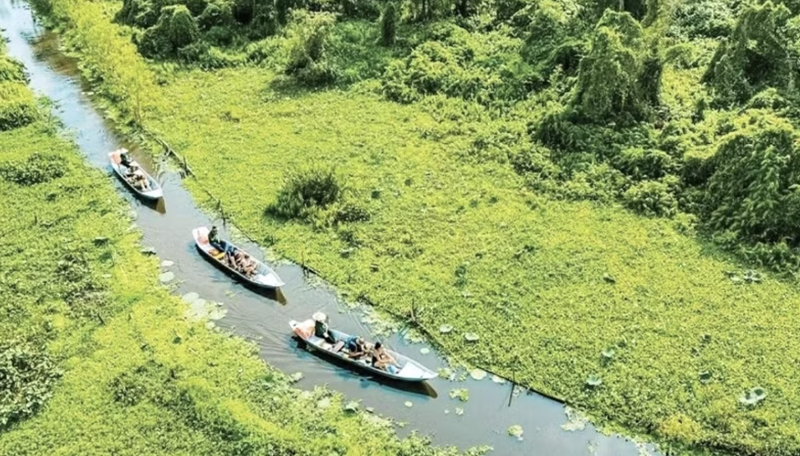
Visitors explore the Tra Su cajuput forest in An Giang province. (Photo: Tra Su Tourism Area) |
Duong Hoang Sum, Director of the Vinh Long Department of Culture, Sports and Tourism and Vice Chairman of the Mekong Delta Tourism Association, noted that beyond being the country’s rice production hub, the region is also a unique “green tourism treasure”. Journeys through bustling floating markets, lush melaleuca forests and ancient pagodas, combined with the warmth and hospitality of local people, can deliver distinctive experiences and help position the region on the global tourism map.
Under the Prime Minister's Decision No.616/QD-TTg, dated April 4, 2026, which approves adjustments to the Mekong Delta master plan for 2021-2030 with a vision to 2050, the region is set to become a distinctive eco-cultural tourism hub within the Mekong subregion.
Three key growth centers have been identified: Can Tho (MICE and riverine urban tourism), An Giang (spiritual, ecological and border tourism), and Ca Mau (marine, mangrove and renewable energy tourism). Based on this, tourism corridors aligned with economic axes will be developed. The Can Tho – Vinh Long – Dong Thap – An Giang corridor will focus on ecological, orchard, agricultural, and inland waterways tourism. The southwestern border corridor (An Giang – Dong Thap – Cambodia) will prioritize spiritual tourism, shopping and cross-border trade, with international connectivity via Tinh Bien and Dinh Ba border gates.
Additional routes include the southwestern coastal corridor (Ca Mau – Hon Khoai – Phu Quoc) for marine eco-tourism, biodiversity research and high-end resorts; intra-regional river routes linked to floating markets, craft villages and heritage sites in Can Tho – Vinh Long – Dong Thap – An Giang; the Mekong international route (Can Tho – Phnom Penh – Bangkok); and inter-regional routes connecting Ho Chi Minh City – Can Tho – Ca Mau – Phu Quoc.
To turn the Mekong Delta into a major growth driver, experts stress the need to address key bottlenecks.
|
|
 |
|
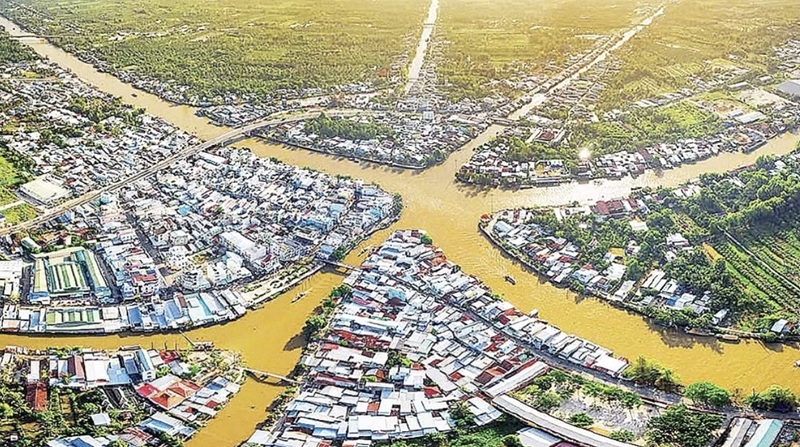
Nga Bay ward in Can Tho city is located at the confluence of multiple rivers. |
Nguyen Thi Hoa Mai, Deputy Director of the Vietnam National Authority of Tourism (VNAT), said that while the region has strong eco-cultural advantages, its branding remains weak, products are repetitive and lack distinctiveness, and economic value is still limited. Visitors tend to make short trips with limited in-depth experiences, resulting in low return rates.
She emphasized the need to innovate products along green and sustainable lines, shifting from standalone offerings to a distinctive tourism ecosystem centered on visitor experience. At the same time, as competition for international visitors intensifies, the “Nine Dragons” region should conduct in-depth market segmentation studies and set clear targets for international arrivals by 2030, enabling more focused promotion strategies.
Nguyen Manh Than, Chairman of the Hanoi Tourism Association, pointed to disparities in resources among localities, underscoring the need for stronger intra-regional linkages, joint promotion, visitor exchange, and collaborative development of unique and emotionally engaging products. Human factors, especially service attitude and skills, remain critical in retaining visitors and improving their experience.
In the long term, stronger multilateral cooperation and a more active role played by tourism associations will be essential to bettering service quality and overall experience, helping the Mekong Delta cement its position on the national and regional tourism map.
Source: VNA