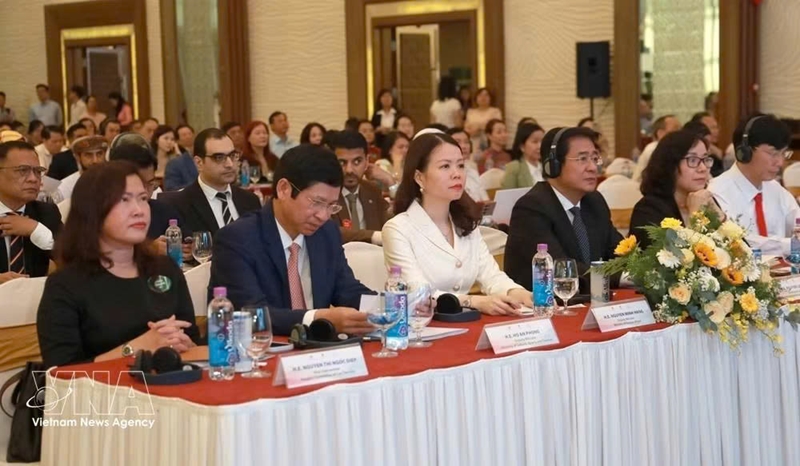
The conference, themed "Vietnam: A New Destination of Halal Tourism," was jointly organised by the Ministry of Foreign Affairs, the Ministry of Culture, Sports and Tourism, and the Khanh Hoa People's Committee.
The country is described as a safe destination with a rich cultural heritage, diverse natural landscapes, distinctive cuisine and a strategic geographical location linking Southeast Asia with Northeast Asia, South Asia and the Middle East.
    |
 |
|
Delegates attend the conference. |
Addressing the conference, Deputy Minister of Foreign Affairs Nguyen Minh Hang said that despite Vietnam's strong tourism potential, Halal tourism remains largely underdeveloped. Of the 21 million international visitors welcomed in the country last year, just over 600,000 were Muslim travelers, accounting for nearly 3% of the total.
In recent years, she noted, the Halal market has been recognized as one of the world's fastest-growing tourism segments. With more than 2 billion Muslims living across over 100 countries and territories, demand for Halal-friendly travel continues to grow in both scale and sophistication, particularly in key markets including Malaysia, Indonesia, Brunei, Singapore, India, the UAE, Qatar, Saudi Arabia, Kuwait and other Middle Eastern countries.
Dr. H. Zuraimi Jumaat, a senior adviser to Halal Hub Vietnam, said Vietnam is internationally recognized for its strengths in agriculture, seafood, food processing, manufacturing and tourism.
He said Halal Hub Vietnam's primary objective is to establish the country as a trusted exporter of Halal-certified agricultural products, seafood and processed foods. At the same time, expanding Halal-friendly tourism services will help position the country as an attractive destination for Muslim travelers worldwide.
Deputy Minister of Culture, Sports and Tourism Ho An Phong said Vietnam will continue to improve institutional frameworks and standards, develop human resources, expand Halal-certified services, strengthen international cooperation, promote business partnerships, and build the country's brand as a new destination for Halal tourism.
He stressed that achieving this goal requires coordinated efforts from ministries, local authorities, businesses and international partners, rather than the tourism sector alone.
In Khanh Hoa, authorities are encouraging businesses to invest in Halal-compliant restaurants, hotels and resorts, establish prayer facilities at airports, accommodation providers and tourist attractions, and improve services for Muslim visitors.
Nguyen Long Bien, Standing Vice Chairman of the provincial People's Committee, said Khanh Hoa considers Halal tourism an important direction to diversify international visitor markets, enhance the destination's competitiveness and create new opportunities for tourism growth.
The provincial administration is also stepping up promotional activities in key markets, including Malaysia, Indonesia, Brunei, Singapore, the Middle East and South Asia. It is developing specialized Halal tourism products, including wellness and spa holidays, golf tourism, MICE tourism, Cham cultural experiences, community-based tourism and ecotourism tailored to the needs of Muslim travelers, he added.
Source: VNA