    |
 |
|
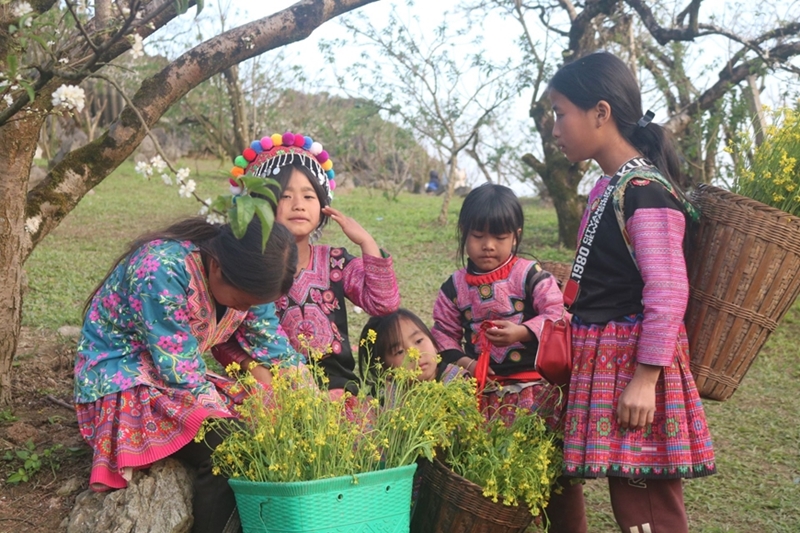
Children participate in community-based tourism activities in the Moc Chau National Tourism Area. |
Located in northwestern Vietnam, Son La covers more than 14,109 square kilometers and is home to over 1.4 million people from 12 ethnic groups. Sharing more than 274 kilometers of border with Laos, the province possesses favorable conditions for developing agriculture linked to tourism.
According to Vu Duc Thuan, President of the Son La Farmers’ Union, the province has more than one million hectares of agricultural land. Fruit trees and hawthorn plantations cover over 85,000 hectares, producing more than 510,000 tons annually. Major agricultural production areas for coffee, tea, fruit, dairy cattle, and reservoir aquaculture have become important resources for experiential tourism activities.
|
|
 |
|
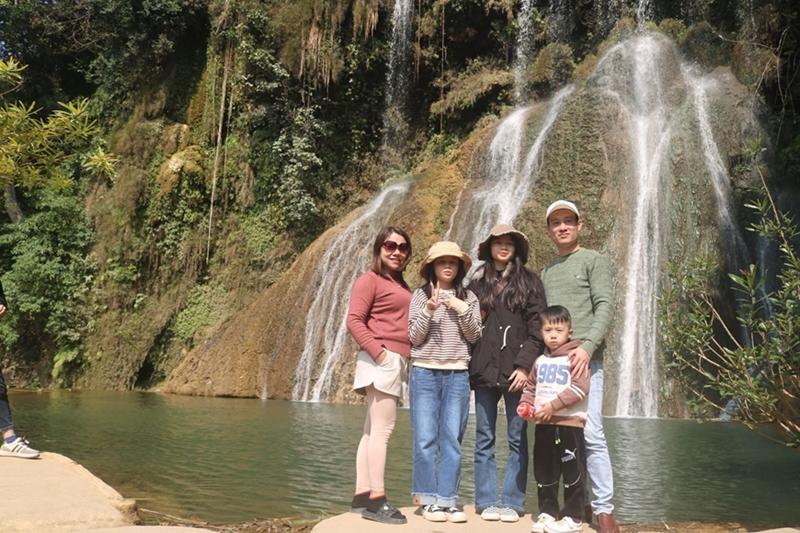
Moc Chau National Tourism Area attracts millions of domestic and international visitors each year. |
Beyond agriculture, Son La offers scenic landscapes, a mild climate, numerous historical and cultural sites, and distinctive ethnic traditions. Thai Xoe Dance has been recognized by UNESCO as an Intangible Cultural Heritage of Humanity. The province is also home to 65 recognized heritage sites, including two special national relics, 16 national relics, and 47 provincial-level sites.
Moc Chau National Tourism Area, the eighth national tourism area recognized in Vietnam, has been honored by the World Travel Awards as the “World’s Leading Regional Nature Destination.” Meanwhile, the Son La Hydropower Reservoir area has been included in Vietnam’s national tourism development plan for 2021–2030, with a vision to 2045.
|
|
 |
|
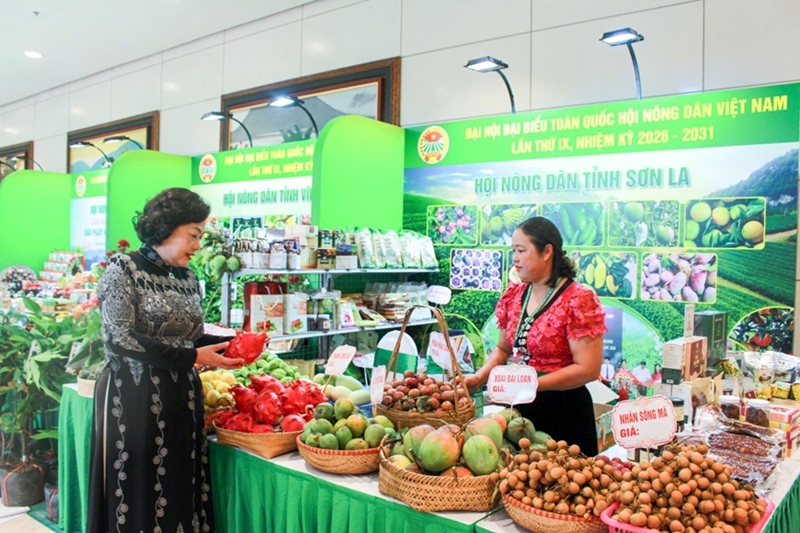
Vice Chairwoman of the National Assembly Nguyen Thi Hong visits a booth featuring OCOP-certified agricultural products from Son La province at the 9th National Congress of the Vietnam Farmers’ Union for the 2026–2031 term. |
These advantages have provided a strong foundation for Son La to develop a multi-value agricultural economy that integrates farming, cultural preservation, and ecotourism.
Recognizing the key role of farmers in this process, the Son La Farmers’ Union has encouraged members to shift from traditional agricultural production toward agricultural services, community-based tourism, experiential tourism, and ecotourism.
Between 2021 and 2025, the Farmers’ Union organized more than 4,500 training and awareness programs for over 580,000 participants. It also supported the development of more than 639 models related to ecological agriculture, community tourism, OCOP products, digital transformation, e-commerce, and product promotion.
As a result, visitors to Son La can now tour tea hills, plum orchards, mango and orange farms, and specialty coffee-growing areas while participating in harvesting activities, exploring local culture, and experiencing community life.
Community-based tourism destinations are attracting growing numbers of domestic and international visitors. Many farming households and cooperatives have increased their incomes by combining agricultural production with tourism services. In 2025, Son La welcomed approximately 5.9 million visitors and generated more than VND 7.3 trillion in tourism revenue.
|
|
 |
|
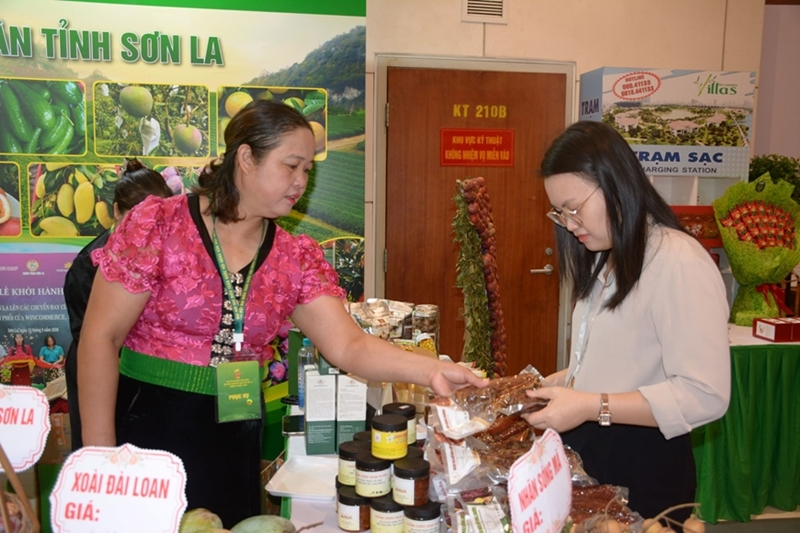
Many agricultural products from Son La province are highly favored by consumers. |
The province is also benefiting from global tourism trends that favor green travel, cultural experiences, and nature-based tourism. Digital platforms and social media have helped promote destinations such as Moc Chau, Ta Xua, Ngoc Chien, Quynh Nhai, and Pha Din to wider audiences.
According to Giang Thi Giang, Deputy Head of the Farmers’ Affairs Committee under the Vietnam Fatherland Front Committee of Son La province, regional transport infrastructure is being upgraded. The Hoa Binh - Moc Chau Expressway is under construction, while plans for the Moc Chau - Son La and Son La - Dien Bien expressways, along with upgrades to Na San Airport, are expected to improve regional connectivity and support tourism growth.
Under its development strategy, Son La aims to transform Moc Chau into a leading tourism center in northern Vietnam’s mountainous region. The Son La Hydropower Reservoir area will be developed toward national tourism area status, while Ta Xua, Quynh Nhai, Ngoc Chien, and Pha Din are expected to become provincial-level tourism destinations.
|
|
 |
|
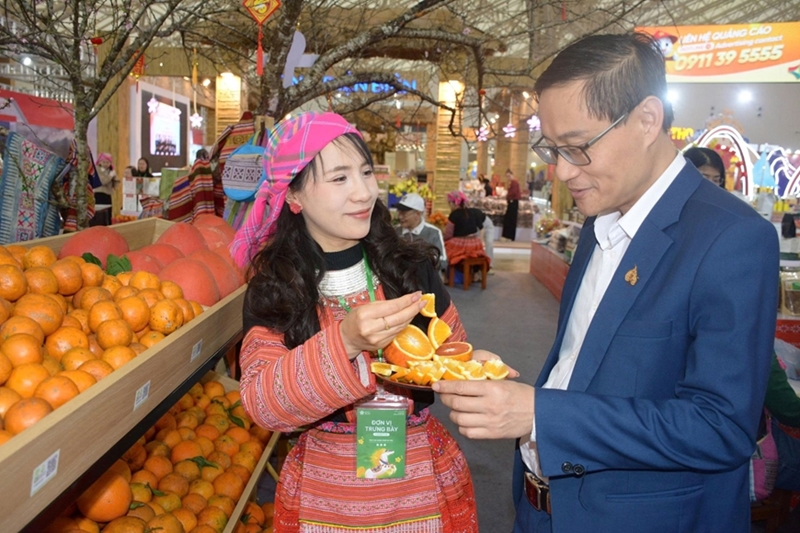
Son La’s oranges are showcased at the Vietnam Exposition Center in February 2026. |
Looking ahead, the Son La Farmers’ Union plans to continue raising awareness among members about developing a multi-value agricultural economy linked to ecotourism and sustainable rural development, helping maximize the effectiveness of agriculture-based tourism models through 2030.
Translated by Tran Hoai