Stretching across central Vietnam, the Truong Son mountain range hosts an ecosystem in which biodiversity is not only preserved but also still unfolding. Each layer of forest, cave system and stalactite formation carries traces of Earth’s long evolutionary history, with new species regularly added to scientific records.
A living “open” ecosystem
Unlike ecosystems where species inventories are largely complete, Phong Nha - Ke Bang National Park remains scientifically “open,” with each survey revealing new findings. Recent studies - from local research projects to international collaborations - have recorded additional bird species and identified the rare parasitic plant Sapria himalayana, which only survives in intact primary forests.
    |
 |
|
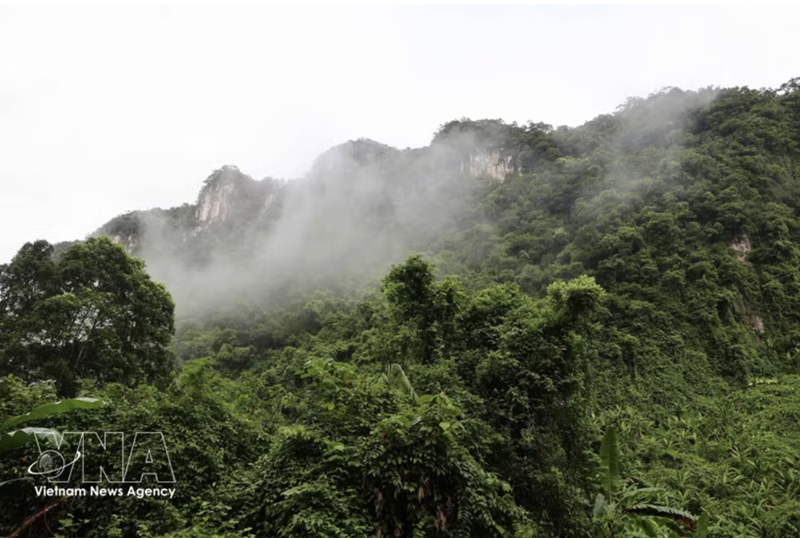
A view of Phong Nha - Ke Bang National Park |
According to the management board of the national park, such discoveries are more than isolated events. They indicate that the forest’s ecological structure remains sufficiently intact to support highly sensitive species - an important biological marker of environmental health.
Surveys of cave-dwelling species continue to uncover new species. These tiny organisms, adapted to permanent darkness, serve as key indicators of the primitive nature of the karst ecosystem - limestone formations shaped over millions of years by water dissolution, concealing vast underground worlds.
To date, the park has documented more than 1,400 animal species and nearly 3,000 vascular plant species, including hundreds listed in Vietnam’s Red Data Book and the International Union for Conservation of Nature (IUCN) Red List, and dozens of species newly described in recent years.
Director of the national park Pham Hong Thai said these numbers highlight not just the area’s rich biodiversity but also its unique ecological makeup - clear proof that much of it is still waiting to be explored.
Prof. Nguyen Nghia Thin, former senior lecturer at the University of Science under Vietnam National University, Hanoi, who conducted extensive research in Phong Nha - Ke Bang National Park, noted that the combination of ancient karst formations, tropical rainforest and the complex terrain of the Truong Son range has created one of Vietnam’s most remarkable biodiversity hotspots, where multiple biotic flows of the Indochinese peninsula converge.
Positioned between major ecological zones, the park acts as a biological crossroad where northern and southern species converge.
Forest ecosystems on limestone - among the most difficult to form and highly vulnerable - have thrived here, creating unique habitats for specially adapted species.
An evolutionary world in darkness
If the forest above ground represents a biodiversity hotspot, the subterranean world in Phong Nha - Ke Bang reveals an entirely different dimension.
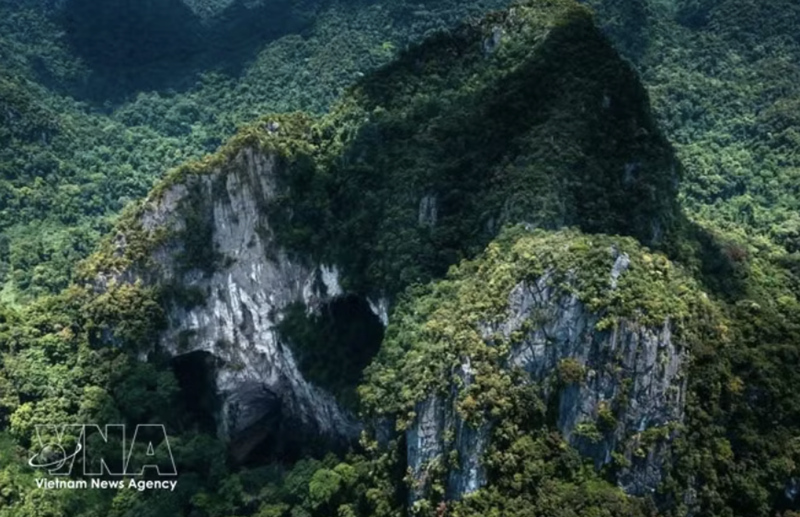
Scientists have identified more than 100 cave-dwelling species, including dozens new to science. Living without light and with limited food sources, these organisms have evolved unique traits over millions of years - loss of pigmentation, reduced or absent eyesight, and heightened tactile and chemical sensing abilities.
|
|
 |
|
Unlike ecosystems where species inventories are largely complete, Phong Nha - Ke Bang National Park remains scientifically “open,” with each survey revealing new findings. |
As a result, researchers describe the cave ecosystem as a “living museum of evolution,” offering rare insights into how life adapts to extreme conditions.
Beyond biodiversity, the park also preserves Earth’s environmental history. Studies led by Dr. Kathleen Johnson from the University of California, the US, show that mineral layers in stalactites can reconstruct Southeast Asia’s monsoon and rainfall patterns over tens of thousands of years.
Findings indicate that during the Last Glacial Maximum around 20,000 years ago, rainfall in central Vietnam declined sharply, reflecting links between monsoon systems, sea levels and global climate change.
In this sense, Phong Nha - Ke Bang is not merely a forest or tourist destination, but a geological “library” preserving records of the planet’s past.
According to the Phong Nha - Ke Bang National Park Management Board, one of the new directions is expanding cooperation with the Hin Nam No area in Laos to form a transboundary conservation landscape sharing the same ancient karst system and ecological corridors. This approach underscores a growing principle in conservation - protecting ecosystems beyond administrative boundaries.
While recognized as a UNESCO World Natural Heritage Site, the park’s true value lies in what it continues to hold - undiscovered species, long-term climate records and rare primary ecosystems. Balancing tourism development with strict conservation remains a key challenge, as once disrupted, such ecosystems cannot be restored within a human lifetime.
What makes Phong Nha - Ke Bang exceptional is not only what has been documented, but what is still being uncovered - an evolving natural archive where the processes of life continue to unfold.
Source: VNA