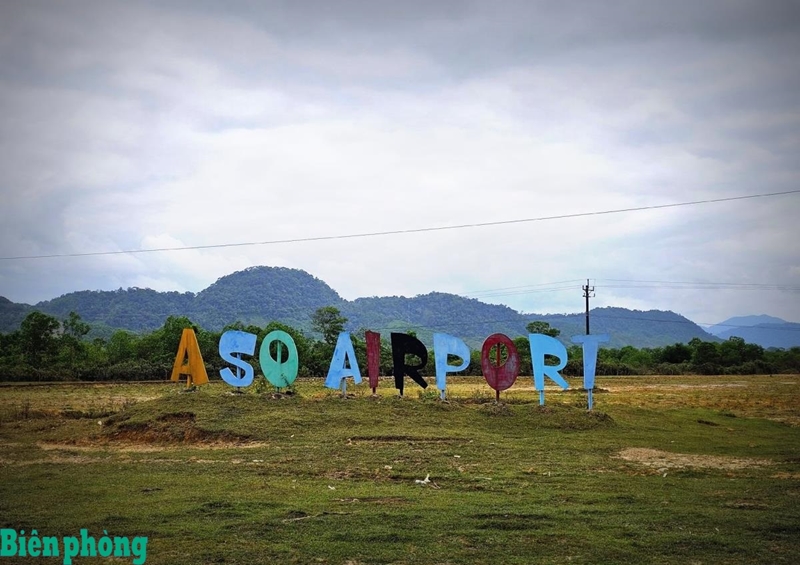
Located in A Sau valley in what is now A Luoi 4 commune, Hue city, A So was once a makeshift airfield used by U.S. forces during Operation Ranch Hand from 1961 to 1971. The site served as a storage area for defoliants sprayed across central Vietnam. The A Luoi region was heavily affected by herbicides, more than half of which were Agent Orange containing highly toxic dioxin.
    |
 |
|
A So was a makeshift airfield used by the U.S. military to store defoliants sprayed across central Vietnam. |
For decades after the war, the area carried the painful legacy of contamination. Dioxin levels in some places were measured at more than 26 times the permitted limit. Entire communities suffered severe health consequences, while farmland, livestock, and water sources were devastated. In one small village alone, 49 residents were victims of Agent Orange-related illnesses and disabilities.
Village elder Ho Van Tuon still remembers American aircraft taking off from A So airfield to spray defoliants over the Truong Son forests, where he and fellow soldiers once fought during the resistance war. Years later, he witnessed children born with disabilities linked to the lingering effects of dioxin, crops failing to grow, fish dying in ponds, and cattle gradually weakening.
About 35 years ago, 95 households settled in the area to rebuild their lives, unaware that dioxin residue remained deep in the soil. Life was difficult, and generations of families continued to suffer from the lasting consequences of wartime chemical exposure.
A major turning point came between 2020 and 2023, when Vietnam’s Chemical Corps under the Ministry of National Defense carried out a large-scale environmental cleanup project. Around 39,000 cubic meters of contaminated soil and more than 9.3 hectares of dioxin-polluted sediment were safely treated, restoring the land to a safe condition for people and the environment.
Today, signs of renewal are visible across A So.
Now 75 years old, Ho Van Tuon says the land has been “liberated” for a second time, this time from dioxin. Standing in the valley planting young acacia trees into the restored soil, he sees not only recovery, but hope for future generations.
Loan - Ta Vai village, once home to only 150 households and 400 residents, has grown to more than 750 households with about 1,200 people. Roads, electricity, schools, and healthcare facilities have improved, while government support programs have helped local ethnic minority communities develop stable livelihoods.
According to Ho Thi Hon, head of Loan - Ta Vai village, residents have received assistance through livestock programs, seedlings, and economic development projects. Poverty rates have declined, while more families are building stable incomes through farming and animal husbandry.
Many households have adopted modern agricultural techniques, focusing on high-value crops such as pomelos, oranges, guavas, and more. Others have expanded into cattle and pig farming, goat raising, rubber cultivation, traditional weaving, and community-based tourism.
|
|
 |
|
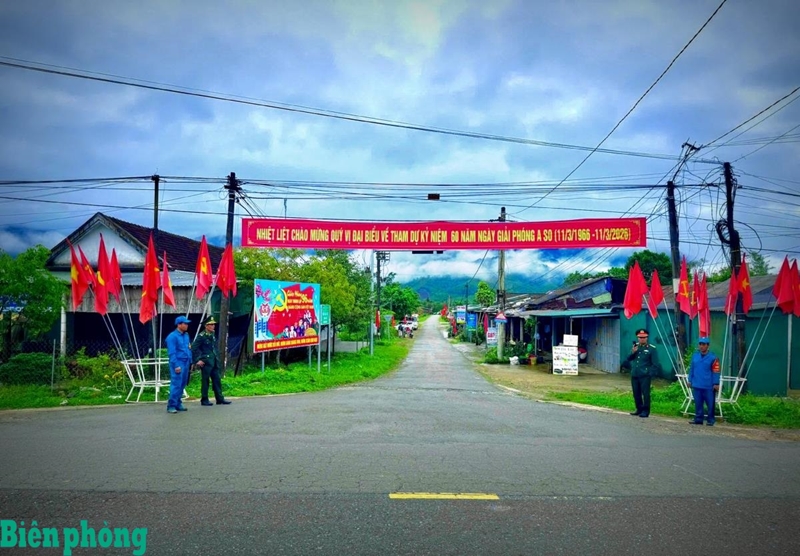
The people of A So has rebuilt their lives and developed the economy on what was once known as the “land of death.” |
One successful example is Ho Thi Sa, a Ta Oi woman who developed a cattle breeding farm with around 100 cows and more than 10 hectares of grazing land. Her farm generates more than VND 1.5 billion in annual income. Her beef products have also been certified organic and contribute to the protected collective brand “A Luoi Golden Cattle.”
Beyond building her own business, Sa shares her farming experience and technical knowledge with others in the community.
A So airfield itself has also changed. Once associated with war and toxic chemicals, the site is now becoming a destination for visitors. Green rice fields stretch toward the mountains, while children herd cattle along village roads carrying baskets filled with fresh vegetables and fruit.
At the A So War Remnants Exhibition House, more than 100 wartime artifacts and photographs documenting the impact of chemical warfare in A Luoi are preserved and displayed.
Ho Dung, Chairman of the People’s Committee of A Luoi 4 commune, said the commune completed all 13 socio-economic development targets in 2025. Programs to replace temporary housing have been implemented, schools have been fully upgraded, and monthly support continues for families affected by Agent Orange.
Local authorities aim to raise average annual income to VND 70 million per person by 2030 while reducing the poverty rate to below 5%.
Today, solidly built houses line the roads of A So, many flying Vietnam’s national flag. After decades of pain and recovery, the once-contaminated land is entering a new chapter.
Translated by Tran Hoai