Since its adoption in 2016, the law has helped safeguard the freedom of belief and religion and support activities of religious organizations. However, after eight years, the lack of provisions governing online activities has become a notable shortcoming.
    |
 |
|
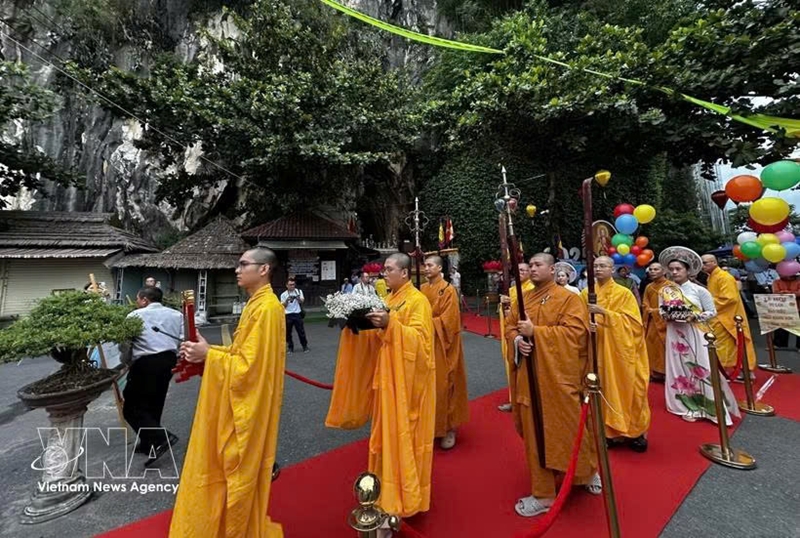
Procession at the Vu Lan Festival - Ngu Hanh Son 2025 |
Venerable Thich Duc Thien, Vice President and General Secretary of the Vietnam Buddhist Sangha’s Executive Council, said digital technologies, including the Internet, AI and social media, are transforming religious practices, shifting them from physical to online spaces. Platforms like YouTube and Facebook now enable teachings to reach large audiences beyond geographical limits.
The dignitary, also a National Assembly deputy of Dien Bien province, noted the current law does not clearly define responsibilities of stakeholders in online religious activities. He stressed the need for comprehensive regulations that both recognize rights and set out obligations for individuals, organizations, state agencies and digital platforms.
Nguyen Dac Vinh, Chairman of the National Assembly’s Committee for Cultural and Social Affairs, said such activities are expanding rapidly, often cross-border and complex, requiring stronger oversight and clearer legal definitions.
From a security perspective, Colonel Nguyen Huu Thien, an official of the Ministry of Public Security, said such activities have become more complicated over time, indicating the need for a legal basis to manage risks and safeguard social order.
The draft revised law, now under discussion at the National Assembly, introduces definitions and a dedicated article on online religious activities, covering registration, stakeholder responsibilities and oversight mechanisms. However, further refinement is necessary to avoid overlaps with existing laws and clarify responsible entities, according to the Committee for Cultural and Social Affairs.
According to Venerable Thich Duc Thien, the amendments will help protect religious freedom in the digital space, facilitate legitimate activities and prevent abuse. He also proposed adding regulations on the use of AI in religious practices, reflecting emerging trends in this field.
Source: VNA