The event, held in response to All People's Health Day (April 7) and World Health Day 2026, underscores the city’s shift toward a more proactive and community-based healthcare model amid mounting public health challenges.
As a dynamic mega-city of nearly 15 million people, Ho Chi Minh City faces rapid urbanization and significant demographic changes. It is also grappling with a dual burden of disease, continuing to control infectious diseases while confronting a sharp rise in non-communicable illnesses such as cardiovascular diseases, diabetes, cancer, mental health conditions, and age-related health issues. In this context, building a preventive, continuous and data-driven healthcare system that is accessible at the grassroots level has become both an urgent requirement and a long-term development direction.
    |
 |
|
Health workers and residents perform mass wellness exercises, promoting healthy lifestyles in the community. |
According to Nguyen Van Vinh Chau, Deputy Director of the municipal Department of Health, the city has officially rolled out “community-based continuous healthcare teams” as part of this year’s campaign. The initiative marks a breakthrough approach to bringing healthcare closer to residents, with teams proactively going door to door to provide care and manage health across the life cycle based on family medicine principles.
The rollout is expected to improve the quality of primary healthcare, strengthen grassroots health services as the “gatekeeper” of the system, reduce pressure on higher-level hospitals, and enhance the efficiency of healthcare resource use.
In parallel, the department is mobilizing its entire healthcare network to provide free specialized health screenings for residents.
On April 5 alone, 58 hospitals and health centers conducted screening programs across 64 wards and communes, with a focus on outlying areas. Beyond early detection, residents receive consultations, long-term health monitoring guidance, and access to specialized services locally. Medical data from these activities are also being integrated into the city’s electronic health records system, contributing to the gradual development of a comprehensive population health database.
The department is also working on a proposal to provide health check-ups for all residents as early as 2026. While the scale poses a major challenge, it also presents an opportunity for the health sector to build a modern population health management model.
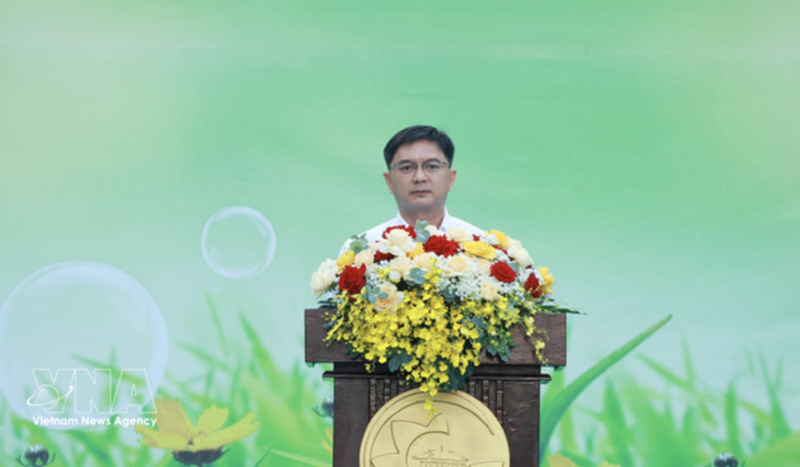
Addressing the meeting, Vice Chairman of the municipal People’s Committee Nguyen Manh Cuong called on the health sector to further strengthen its core role, accelerate innovation in grassroots healthcare, and effectively implement community-based continuous care models.
|
|
 |
|
Vice Chairman of the Ho Chi Minh municipal People’s Committee Nguyen Manh Cuong speaks at the event. |
He also stressed the importance of applying digital technology, data systems and electronic health records in health management and service delivery.
Other departments, agencies, local authorities, schools and organizations were urged to work closely with the health sector to promote healthier living environments; expand public sports movements; improve environmental hygiene; and encourage green, scientific and healthy lifestyles across communities, workplaces and households.
Source: VNA