According to the municipal Department of Construction, the routes were introduced through a bidding process as part of efforts to accelerate the transition to environmentally friendly vehicles.
    |
 |
|
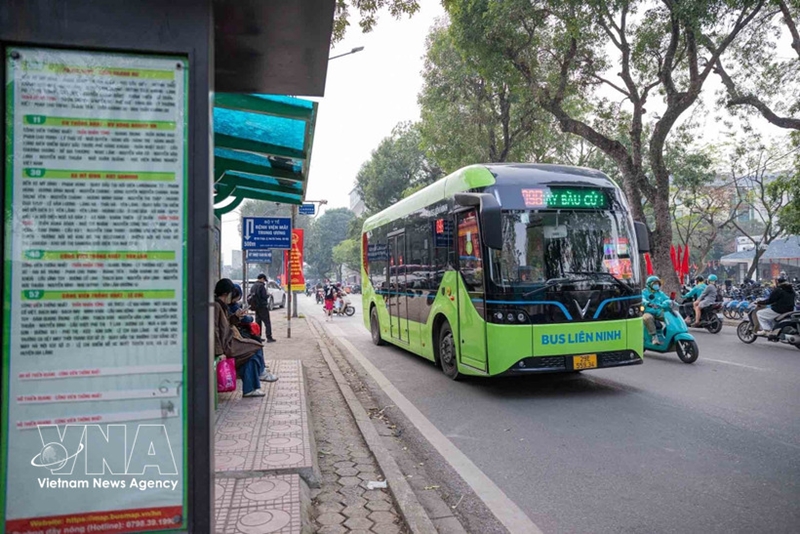
Hanoi rolls out 10 electric bus routes from April 1. |
Under the plan, route No. 74 will be supplemented with 33 electric buses from April 3. By April 30, the city will add another 170 electric buses across 11 routes, bringing the total number of electric bus routes to 39 with 683 vehicles, accounting for 35% of the total fleet.
By the end of April, the number of buses using electricity and other green energy sources in the city is expected to reach 822, including 683 electric buses and 139 compressed natural gas (CNG) buses, representing 42.1% of the total number of vehicles.
The results reflect Hanoi’s determination to develop a sustainable public transport system and move toward building a greener, more modern urban environment.
According to the Hanoi Public Transport Management and Operation Centre, the city is implementing plans to adjust and strengthen bus routes to support the transition to green vehicles and the development of low-emission zones.
Specifically, by July 1, 100% of buses operating within Ring Road 1 will use green energy such as electricity or CNG. The transition will expand to Ring Road 2 by January 1, 2028, and to Ring Road 3 by 2030.
As of March, Hanoi’s bus network comprises 155 routes, including 128 subsidized routes, 11 non-subsidized routes, 13 inter-provincial routes and three city tour routes. The network covers all 126 communes and wards in the city and connects Hanoi with five neighboring localities – Hai Phong, Bac Ninh, Hung Yen, Ninh Binh and Phu Tho.
The system currently includes 5,024 bus stops, 354 shelters, five transfer stations, 133 terminals and 12.9 kilometers of dedicated bus lanes.
A total of 11 transport companies are operating the subsidized routes, with Hanoi Transport Corporation accounting for the largest share at 68 routes, or 53.1%.
The city’s bus fleet totals 2,239 vehicles, including 1,925 subsidized buses, with more than 1,500 meeting Euro 4 emission standards or higher.
Hanoi currently offers three types of tickets – single-trip tickets, monthly passes and free passes. Fare policies include free travel for five groups: people with meritorious service to the nation, persons with disabilities, senior citizens aged over 60, children under six, and members of poor households. Students, workers in industrial zones and office employees purchasing group monthly passes receive subsidies of 50% and 30%, respectively.
With a network covering all communes and wards, buses, together with urban railway lines, have become a key mode of public transport in the capital.
Source: VNA