Held under the theme "Circular economy in manufacturing," the forum was jointly organized by the Ho Chi Minh City Investment and Trade Promotion Centre (ITPC) and the German Business Association (GBA).
    |
 |
|
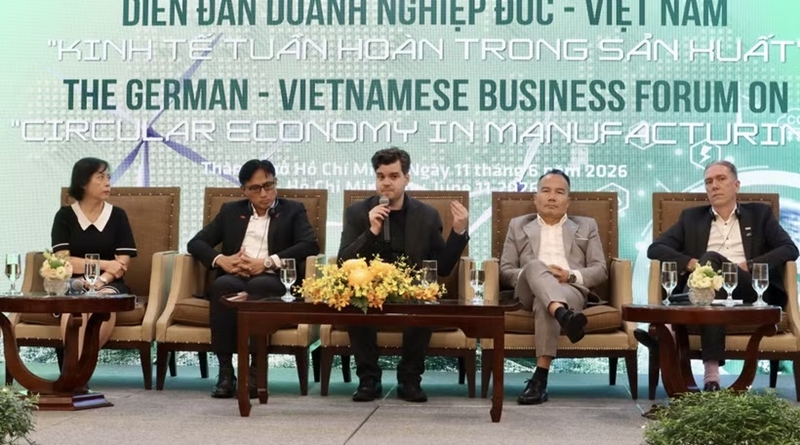
Experts discuss cooperation opportunities in Vietnam - Germany manufacturing value chains at the forum. |
German Consul General in Ho Chi Minh City Andrea Suhl said Vietnam is entering a promising new phase of economic growth and modernization, with ambitions to become a high-income country by 2045. Achieving that vision will require not only innovation and investment but also a fundamental shift towards resource efficiency and circular economic models, she noted.
The diplomat noted that amid growing geopolitical uncertainties and supply chain disruptions, the circular economy has become a strategic tool for enhancing economic resilience and safeguarding production. Germany remains committed to supporting Vietnam's green transition through technology transfer, knowledge sharing and long-term business cooperation.
Cao Thi Phi Van, Deputy Director of ITPC, said Germany is an important partner of Vietnam and a global leader in green technology, smart manufacturing, automation and circular economy solutions. The combination of German technological expertise and Vietnam's manufacturing capabilities and strong commitment to transformation would create significant opportunities in green production, supporting industries, digital transformation, supply chain management and eco-industrial park development, she stressed.
Alexander Ziehe, Chairman of the German Business Association in Vietnam, said Vietnam, particularly Ho Chi Minh City, is well positioned to integrate circular economy principles into its next stage of industrial development. Strengthening sustainable supply chains, improving local suppliers' capabilities and promoting technology transfer would enable Vietnamese businesses to move further up global value chains.
Speakers also highlighted that stricter international requirements on carbon emissions, supply chain transparency, traceability and ESG standards are reshaping global trade.
Nguyen Trong Luat, Vice Chairman of the Ho Chi Minh City Association of Supporting Industries (HASI), said Vietnamese enterprises need stronger management capacity, skilled human resources and closer links with foreign-invested companies to remain competitive.
Business representatives agreed that sustainable manufacturing now extends beyond environmental concerns to encompass digitization, data management and end-to-end supply chain optimization. They stressed that greater investment in innovation, workforce development and public-private partnerships will be essential to scaling up circular economy models and strengthening Vietnam's role in global manufacturing networks.
Source: VNA