Starting with traditional dishes cooked from mountain goat meat, he has continuously researched and created distinctive specialties such as smoked goat leg, goat spring rolls, goat pâté, and braised goat belly. Beyond promoting Ninh Binh’s culinary specialties nationwide, he has also contributed to bringing Vietnamese cuisine to the international stage.
    |
 |
|
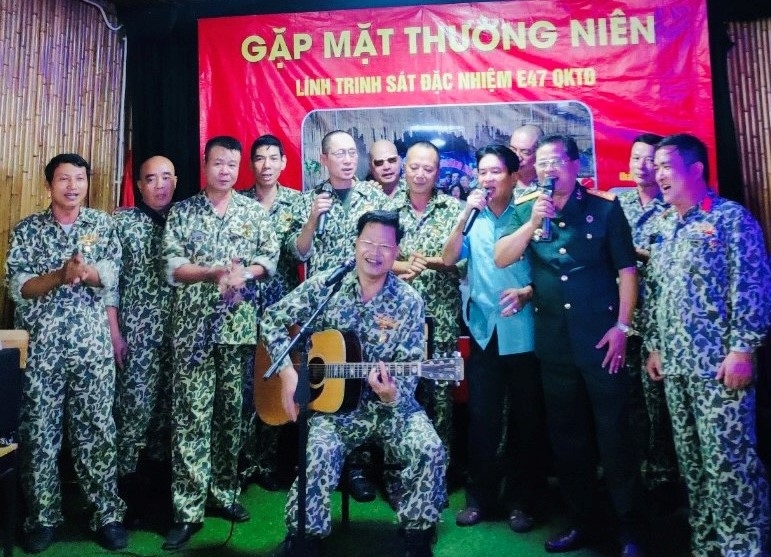
Veteran Nguyen Dac Long (center) at an annual reunion with his comrades |
Born in 1969 in Ngoc Khanh ward, Ba Dinh district, Hanoi, Nguyen Dac Long volunteered to join the military at the age of 17, serving in Regiment 47 under the Hanoi Capital Command. Following training, he was selected for a special reconnaissance unit thanks to his agility, courage, and strong sense of responsibility.
During his military service, alongside training and combat readiness duties, he also worked with authorities to combat crime in Hanoi, particularly theft and pickpocketing at train and bus stations. Those challenging years helped shape his resilience, discipline, and determination.
After leaving the military in 1990, he returned to Hanoi and took on various jobs to make a living while gradually building experience in the food service industry. By 2004–2005, he had already established a name for himself among diners.
|
|
 |
|
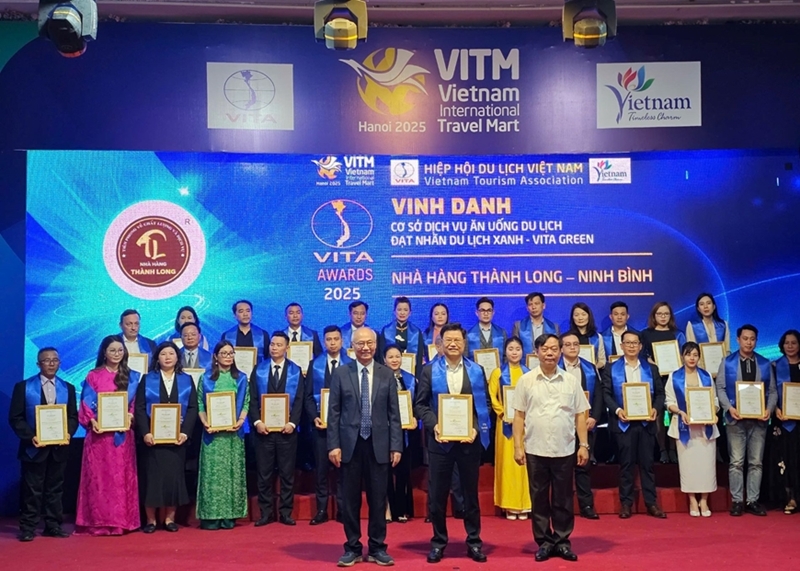
Veteran Nguyen Dac Long and the Thanh Long Restaurant chain honored at the 2025 VITA Awards organized by the Vietnam Tourism Association |
A major turning point came in 2009 during a visit to Bai Dinh Pagoda, when he developed a deep connection with the land of Ninh Binh and decided to settle there. He opened a restaurant in the Trang An scenic area, focusing on local flavors and culinary identity.
At a time when his business was thriving, Nguyen Dac Long made an unconventional decision by advocating for the establishment of a Ninh Binh mountain goat culinary village. To realize the model, he gave up his own distinct branding so that participating restaurants could share standardized signage, publicly listed prices, and consistent quality standards. His goal was to eliminate the disorderly practice of aggressively soliciting tourists at spiritual and tourism sites, which he believed negatively affected both restaurant quality and the image of Ninh Binh cuisine.
He personally persuaded restaurant owners to join the model and invited lecturers from tourism training institutions to provide guidance on customer service, communication skills, and professional hospitality standards. When the culinary village officially opened, 40 restaurants participated with the shared goal of developing sustainable tourism and building a reputable culinary brand through quality service and civilized business practices.
|
|
 |
|
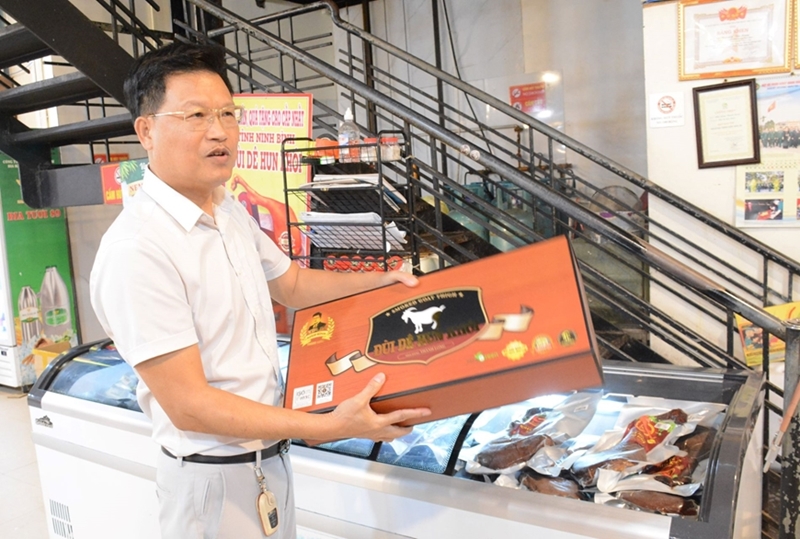
Veteran Nguyen Dac Long alongside his signature goat meat products from Ninh Binh |
Although the culinary village was not in business for long due to various objective and subjective factors, the experience provided him with valuable lessons and further strengthened his commitment to developing cuisine rooted in Ninh Binh’s identity.
Determined to build a distinctive brand in a highly competitive market, Nguyen Dac Long focused on developing goat-based specialties not only as a business venture but also as a way to promote local culture and products. As his restaurant system expanded to three establishments in Ninh Binh, he concentrated on maintaining product quality, reasonable pricing, and carefully controlled ingredient sources while continuing to innovate with dishes such as goat spring rolls, goat pâté, smoked goat meat, and especially smoked goat legs.
The idea for smoked goat legs emerged after he noticed the growing popularity of Spanish smoked ham products in Vietnam. He sought to create a product that retained the distinct flavor of Ninh Binh mountain goat while also appealing to modern tastes and international diners.
|
|
 |
|
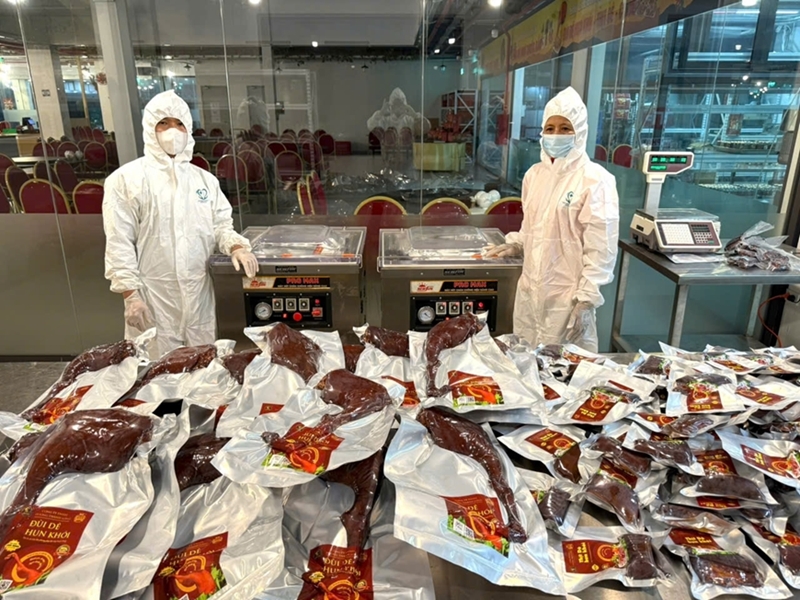
Veteran Nguyen Dac Long has invested systematically in the production process to ensure product quality. |
To achieve that goal, he spent months researching and experimenting. Hundreds of batches had to be discarded before the product met his standards. Despite repeated failures, he continued refining recipes, adjusting spice ratios, and improving smoking techniques. In 2022, the smoked goat leg product was officially launched and received positive feedback from culinary experts and international diners, including Japanese food specialists, who praised its rich flavor and natural sweetness. The product was later introduced at several international culinary forums and recognized as a specialty carrying a strong Vietnamese identity.
Beyond business development, the veteran has also actively contributed to strengthening the local tourism and culinary community. In 2022, he participated in establishing the Ninh Binh Restaurant Association Branch under the Vietnam Tourism Association, the first restaurant association branch of its kind in the country. The association was founded with the goal of promoting civilized and sustainable business practices.
|
|
 |
|
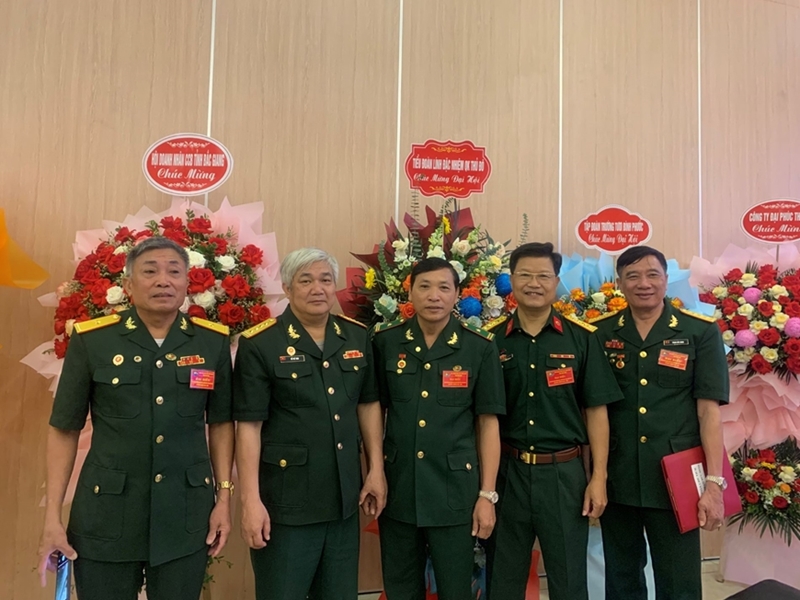
Veteran Nguyen Dac Long (second from right) actively participates in activities organized by the Vietnam Veterans Entrepreneurs Association. |
It has since attracted dozens of members, including three-star and five-star hotels as well as major tourist destinations. He later continued his efforts by helping establish a chefs’ association aimed at improving service quality and preserving local culinary values.
He also actively participates in activities organized by the Vietnam Veterans Entrepreneurs Association, which regularly conducts social welfare and gratitude programs. These efforts reflect the commitment of veterans like him to continue upholding the qualities of “Uncle Ho’s soldiers” and contributing to the community.
Currently, his restaurant chain provides stable employment for more than 100 local workers, with average monthly incomes ranging from VND 8 million to VND 25 million, contributing to improved living standards and the development of tourism and the local economy in Ninh Binh.
Translated by Tran Hoai