At one of Hanoi’s largest safe vegetable production zones, Nguyen Van Tung, Director of the Dong Anh safe vegetable cooperative, can adjust nutrient levels in irrigation water, control the cooling system, monitor pest outbreaks and check crop health in real time, all from a single smartphone. The tech upgrade has delivered a massive 30% jump in productivity while slashing water and fertilizer use by more than 40% compared to traditional farming.
The packages of vegetables come with a QR code so buyers can instantly trace when it was planted, how it was grown and whether it meets quality standards. The co-op now pumps out tens of tonnes of clean, safe produce every month straight to schools and supermarkets across the capital.
    |
 |
|
An unmanned aerial vehicle is used in rice cultivation in Vi Thanh 1 commune, Can Tho city. |
In Ho Chi Minh City, the GAP safe vegetable cooperative in Dong Thanh commune used 50-70 million VND (192-269 USD) per ha with conventional methods. After switching to high-tech and circular farming practices, costs have been slashed dramatically to just 20-30 million VND per ha.
These are only two snapshots from a growing wave of enterprises and cooperatives in Vietnam’s biggest cities that are using digital tools and green practices.
The move aligns with the Politburo’s Resolution 57-NQ/TW, from December 22, 2024, which presents guidelines for breakthroughs in science and technology, innovation and national digital transformation.
Prof., Dr. Mac Quoc Anh, Deputy Chairman and Secretary General of the Hanoi Association of Small and Medium Enterprises, pointed to the Ministry of Finance data showing that about 60% of companies have started using basic digital tech, while roughly 20% now have clear digital strategies. But only 5% has gone all the way with full-blown digital transformation.
|
|
 |
|
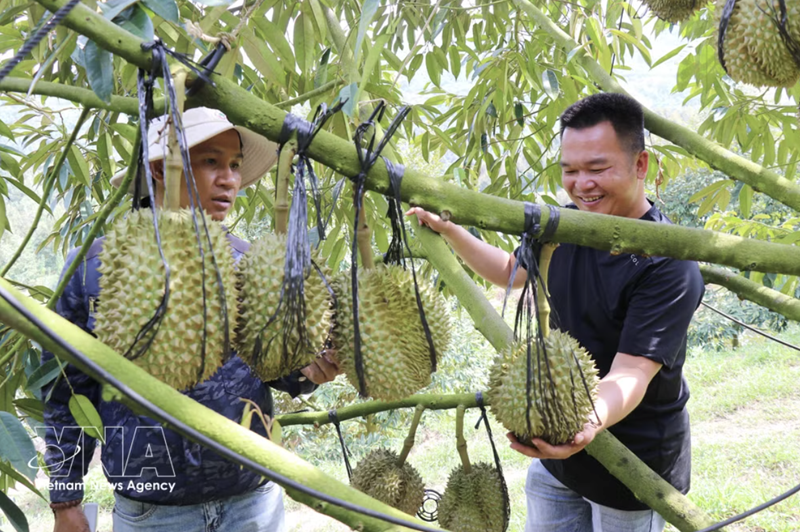
A hi-tech durian farming model at Sakura Farm in Dong Khanh Son commune, Khanh Hoa province |
A Vietnam Chamber of Commerce and Industry survey revealed that around 40% of firms are finally paying attention to Environmental, Social and Governance (ESG) standards, yet just 10% have rolled out large-scale green production models. The numbers indicate that Vietnam’s business makeover is still in its early stages, with ample room left to grow.
To speed up the dual transition, experts said authorities must refine institutional frameworks for the digital and green economies, expand the green finance ecosystem, and roll out stronger incentives for small and medium-sized enterprises through consulting, training and technology transfer. Greater investment in the training workforce for digital technology, ESG governance and green innovation is also critical, alongside keeping the national digital infrastructure rolling forward.
Deputy Minister of Agriculture and Environment Vo Van Hung said the sector will focus on three key tasks, including moving from experience-based, manual management to data-driven governance, completing shared industry databases that are “accurate, sufficient, clean, and up-to-date,” and adopting digital tools for better monitoring, forecasting, and decision-making.
Source: VNA