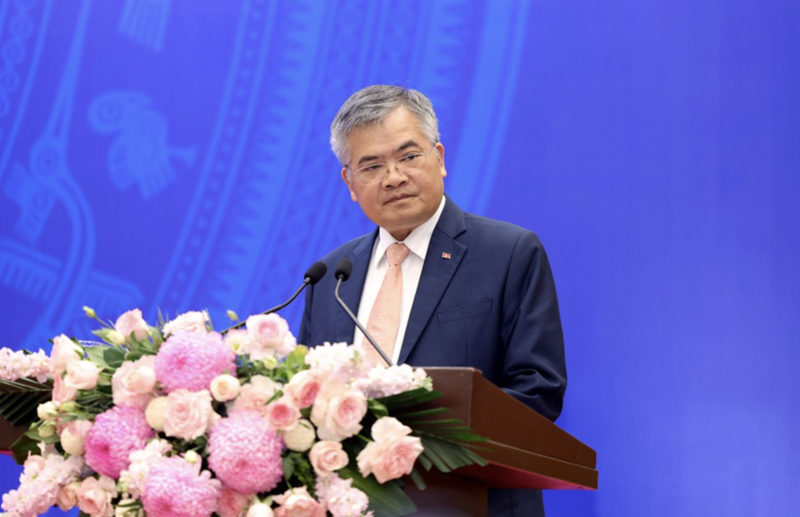
Speaking at the press briefing, Vice Chairman of the Presidential Office Can Dinh Tai highlighted that amnesty is an important legal institution stipulated in the Constitution and the 2018 Law on Amnesty. Over the years, its implementation has consistently reflected the Party and State’s major policy of clemency and humanitarianism, while reinforcing public confidence in the strictness and fairness of the law and affirming Vietnam’s commitment to ensuring human and citizen rights equitably.
    |
 |
|
Vice Chairman of the Presidential Office Can Dinh Tai speaks at the press conference. (Photo: VGP) |
He pointed out that recent amnesty rounds have been conducted legally, bringing about positive results on political, legal, social, and diplomatic fronts. In 2025 alone, more than 22,000 inmates were granted early release, while political security and social order remained firmly maintained. Most beneficiaries have successfully reintegrated into society, earning public support and international recognition.
This year marks a significant transition period for Vietnam, associated with major political events, including the success of the 14th National Party Congress, the election of deputies to the 16th National Assembly and People’s Councils at all levels for the 2026–2031 tenure, and the 51st anniversary of the liberation of the South and national reunification.
On April 7, Party General Secretary and State President To Lam signed Decision No. 457/QD-CTN on amnesty at the request of the Government. The issuance of the decision on the first working day of the 2026–2031 presidential term underscores the consistent stance of the Party and State in upholding the rule of law alongside a responsible and conditional humanitarian policy.
According to the decision, amnesty will be granted to prisoners serving fixed-term sentences, life sentences commuted to fixed terms, and those temporarily suspended from serving their sentences, on the occasion of the April 30 anniversary and major national political events. Time served for consideration is calculated up to May 31, 2026.
Eligible inmates must demonstrate significant progress, good rehabilitation awareness, and be classified as having good or fairly good conduct in accordance with the law on criminal judgment enforcement. They must also have served a minimum portion of their sentences, fulfilled additional penalties such as fines and court fees, and completed civil obligations, including compensation in corruption-related cases.
The decision also specifies 16 categories of offenders ineligible for amnesty, including those convicted of crimes against national security, terrorism, espionage, or particularly serious offenses, as well as repeat offenders or those currently under prosecution for other crimes.
Regarding special cases, the Government will coordinate with the Supreme People’s Court, the Supreme People’s Procuracy and relevant bodies to compile dossiers for submission to the State President for consideration.
|
|
 |
|
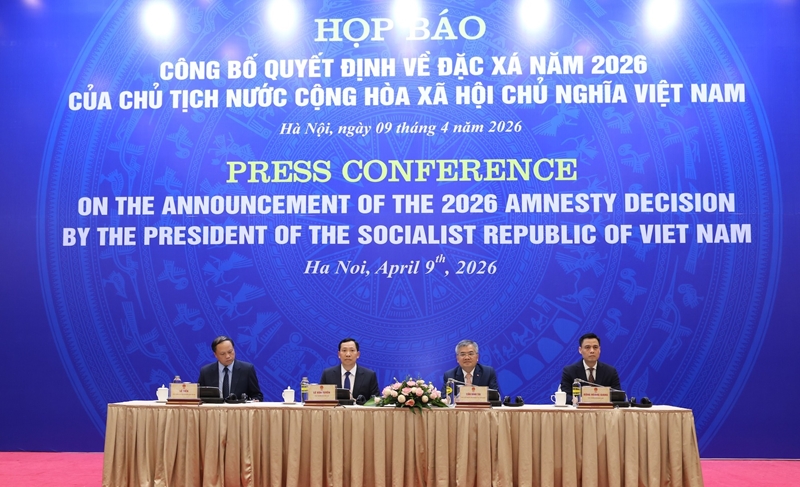
Delegates at the press conference |
Addressing questions on reintegration support, Deputy Minister of Public Security Senior Lieutenant General Le Van Tuyen said that after nearly three years of implementing the Prime Minister’s Decision No. 22/2023/QD-TTg on credit for former inmates, nearly 15,000 beneficiaries have accessed loans totaling nearly 1.3 trillion VND (nearly 50 million USD) as of April 2026 to support production, business activities and livelihood stabilization.
He added that the Ministry of Public Security will propose amendments to expand loan limits and improve access to credit for former inmates in the coming time.
Tuyen also pointed out two key new features of the amnesty decision in 2026 compared to last year's version, including clearer minimum requirements for sentence classification periods and expanded categories of ineligible offenders, ensuring more consistent and rigorous implementation nationwide.
Source: VNA