Talking with the Vietnam News Agency, Tam said Vietnam and Sri Lanka have seen their traditional friendship steadily growing across multiple fronts since they established diplomatic ties on July 21, 1970.
    |
 |
|
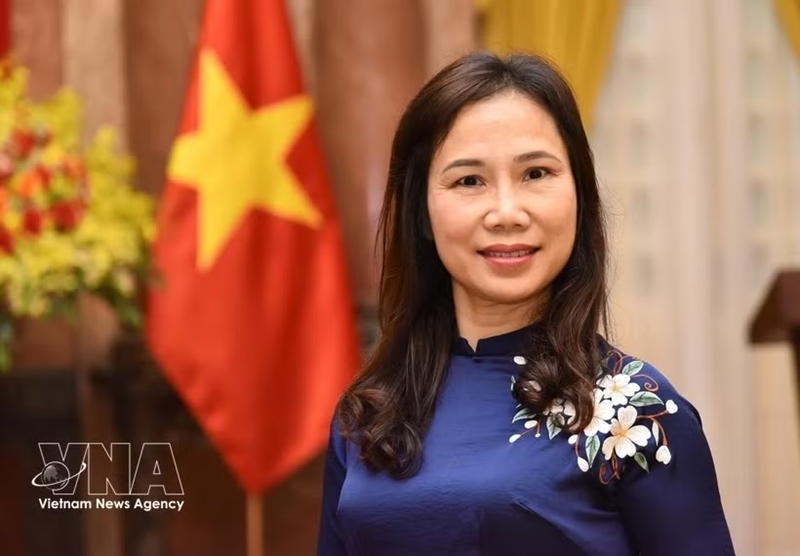
Vietnamese Ambassador to Sri Lanka and Maldives Trinh Thi Tam |
A defining feature of their relationship is the high level of political trust and rare stability. Sri Lanka was among the earliest South Asian partners to set up ties with Vietnam and has consistently backed the country through various challenging periods. The two sides have maintained regular exchanges at all levels, worked closely, and supported each other at global and regional forums, particularly within the United Nations, South–South cooperation mechanisms, and the ASEAN Regional Forum (ARF). They share common values of peace, cooperation, and sustainable development, which form a solid base for deeper, more substantive collaboration in other areas.
Economically, two-way trade remains modest in scale but has sustained steady growth with a complementary structure. In recent years, turnover has neared 300−400 million USD, and both countries have set a target of 1 billion USD in the near future, a signal of strong political will. The trade profile is largely complementary rather than competitive: Vietnam’s exports center on electronics, apparel, and industrial materials, while Sri Lanka’s strengths lie in tea, rubber, yarn, and agricultural products, creating ideal conditions to expand supply chain cooperation.
Other areas, including agriculture, aquaculture, education, culture, tourism, religion, and people-to-people exchanges, have also seen positive progress, supported by geographic, historical, and cultural similarities. In 2025 alone, more than 14,000 Sri Lankan visitors travelled to Vietnam for tourism and business scouting.
Despite these gains, headwinds persist, including geographical distance, limited logistics and transport connectivity, relatively small market size, and global economic fluctuations weighing on trade and investment.
To address these constraints, both sides have adopted a suite of measures. They are stepping up high-level visits, using existing cooperation mechanisms and agreements more effectively flexibly, advancing investment and trade through practical new approaches, and exploring new areas such as digital transformation, renewable energy, and maritime economy.
Overall, Tam said Vietnam–Sri Lanka relations have moved beyond a phase of traditional friendship toward substantive, development-oriented cooperation with ample untapped potential. A solid foundation, shared determination from both governments and peoples, and naturally complementary economies will enable bilateral ties to grow stronger, more effective, and increasingly strategic in the coming years.
According to her, the top Vietnamese leader’s upcoming visit carries strategic significance and long-term orientation, coming after the two countries recently marked 55 years of diplomatic ties and as they seek to lift cooperation in a changing global context.
The visit underscores Vietnam’s regard for Sri Lanka as a long-standing partner in South Asia. It also offers an opportunity for them to take stock of more than five decades of collaboration and development, and identify concrete directions and measures to raise bilateral ties to a new level.
Taking place as both economies undergo profound transitions, the visit is anticipated to reinforce political trust and serve as a platform to discuss ways for stronger economic, trade, and investment ties. It will also aim to expand collaboration in such potential areas as agriculture, high technology, fisheries, education and training, tourism, and logistics, with new agreements likely to be signed or advanced.
The visit is expected to generate fresh momentum and cooperation frameworks, delivering breakthroughs in key sectors, including trade, investment, agriculture, aviation, and logistics, via concrete agreements. It also looks set to open new avenues, particularly in the digital economy, innovation, and energy transition that match the development needs of both countries in the coming years, she added.
Outlining Vietnam’s plans to deepen cooperation, Tam said both sides will continue solidifying the political-diplomatic foundation by maintaining high-level exchanges across Party, Government, and parliamentary channels; maximizing the effectiveness of bilateral cooperation mechanisms; and reinforcing policy consultation and coordination at global and regional forums, particularly the United Nations and within South-South cooperation frameworks.
On the economic front, Vietnam aims to shift from potential to concrete outcomes. Priorities include boosting business connectivity, diversifying traded goods, and facilitating bilateral trade, potentially through negotiating and signing a preferential or free trade agreement. Both sides seek to achieve the 1 billion USD trade target, expand two-way investment, especially in processing industries, agriculture, and logistics, and strengthen regional supply-chain connectivity by leveraging Sri Lanka’s strategic position along major international maritime routes.
Cooperation in national defense-security and legal affairs will be nurtured under existing mechanisms and agreements, with an emphasis on expanding joint work in maritime security, cybersecurity, and United Nations peacekeeping operations.
She also urged broader coordination in emerging and high-potential areas such as digital transformation, digital economy, green economy, renewable energy, sustainable agriculture, maritime economy, and logistics.
People-to-people exchanges, along with cultural and educational ties, will be further intensified through diverse and innovative approaches, contributing to a stronger social foundation for bilateral relations.
With these orientations, Vietnam expects its traditional friendship and multifaceted cooperation with Sri Lanka to continue growing robustly, making positive contributions to regional peace, stability, and development, she added.
Source: VNA