According to the Ministry of Agriculture and Environment, Vietnamese dragon fruit, a major foreign currency earner, remains subject to enhanced control under Annex II of Regulation (E.U.) 2019/1793, with an inspection frequency of 30%.
The pressure on exporters is expected to increase further after the E.U. announced on January 29, 2026, a shift in setting maximum residue limits (MRLs) from a “risk-based” to a “hazard-based” approach. Under the new method, high-risk substances potentially linked to cancer or endocrine disruption will face a default MRL of just 0.01mg/kg. This may directly affect agricultural production processes in exporting countries, including Vietnam.
    |
 |
|
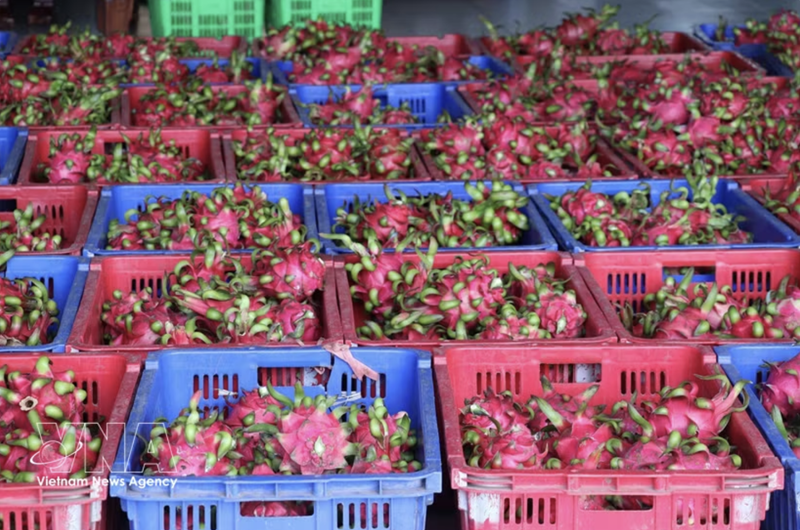
Dragon fruit is among major foreign currency earner of Vietnam. |
Deputy Minister of Agriculture and Environment Dang Ngoc Diep said the ministry has directed specialized agencies and localities to assess the impact of the new regulations and review issues to serve dialogue with E.U. authorities. It has also organized technical training programs to update businesses and producers on new requirements to ensure compliance throughout the production and export chain.
Vietnamese authorities said food safety warnings from the E.U. declined sharply from 64 cases in 2024 to 17 in 2025 thanks to strengthened inspections, traceability measures and corrective actions.
Notably, an inspection by the E.U. Directorate-General for Health and Food Safety (DG-SANTE) in June 2025 gave positive assessments of Vietnamese chili, dragon fruit and durian exports, creating a basis for future negotiations to reduce inspection frequency.
Huynh Tan Dat, Director of the Department of Plant Production and Protection, said Vietnam is promoting sustainable farming models, reducing dependence on chemicals, and increasing the use of biological plant protection measures to improve compliance with E.U. standards. Inspections and stringent settlement of violations will also be stepped up to boost production transparency and meet international requirements.
Deputy Minister Diep said stricter E.U. requirements present both a challenge and an opportunity for Vietnam’s agricultural sector to improve product quality, transparency and sustainability, thereby strengthening the position of Vietnamese farm produce in international markets.
Source: VNA