Fuel prices drive CPI hike
Data from the National Statistics Office (NSO) under the Ministry of Finance show that the consumer price index (CPI) in March 2026 rose 1.23% month-on-month, 2.44% compared with December 2025 and 4.65% year-on-year – the highest March increase recorded in the past five years, signaling intensifying inflationary pressure.
    |
 |
|
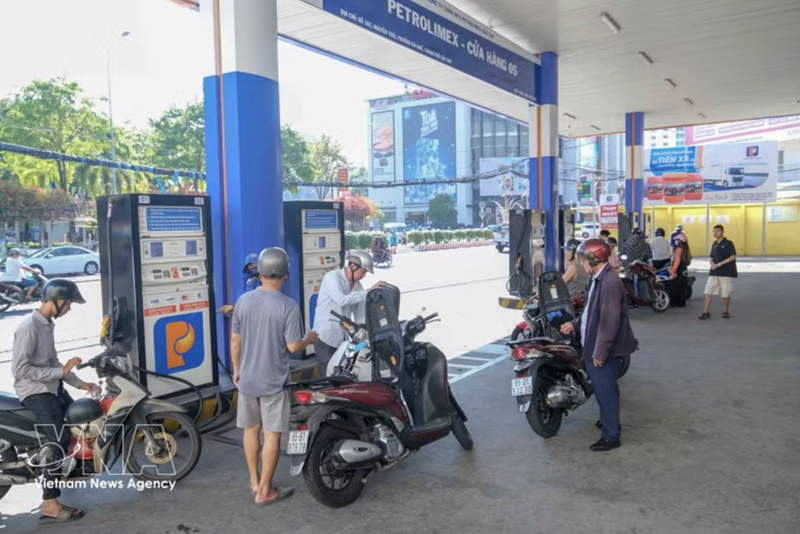
A filling station of Petrolimex |
The rise was mainly driven by domestic fuel prices following global market trends, alongside higher material and transportation costs. Increasing energy prices have pushed up production and logistics expenses, spreading cost pressures across multiple goods and service categories, the NSO said.
Among the 11 major categories of consumer goods and services, nine recorded price increases, led by transportation, which surged 12.85%. Petrol prices climbed 29.72% while diesel prices jumped 57.03% amid global energy supply disruptions linked to tensions in the Middle East.
Higher fuel costs also drove transport service prices sharply upward, with airfares rising more than 23%, rail transport nearly 14%, and waterway transport over 6%, exerting broad spillover effects on overall price levels.
Housing, electricity, water, fuel and construction materials rose 0.77%, with strong increases in kerosene prices (over 62%), gas prices (5.56%) and construction materials. Meanwhile, medicine and healthcare services edged up 0.38% due to higher imported input costs and service price adjustments in several localities.
In contrast, food and catering services declined 0.59%, with food prices falling 1.41%, helping to moderate CPI growth. Culture, entertainment and tourism prices also eased slightly as post-Tet consumer demand weakened.
Maintaining price stability
In the first quarter of 2026, CPI went up 3.51% year-on-year while core inflation rose 3.63%, indicating persistent underlying price pressures that require close monitoring.
According to the NSO, CPI growth was largely fueled by essential goods. Housing and construction materials rose 5.69%, contributing 1.29 percentage points to overall CPI expansion, mainly due to a 6.55% increase in house rental prices and a 12.26% surge in construction materials amid stronger repair and building demand and rising input costs. Household electricity prices also climbed 5.55%, adding to living expenses.
Food and catering services rose 4.55%, contributing the largest share, 1.63 percentage points, to CPI. Pork prices increased 7.14% due to limited supply and higher farming costs, while poultry prices and dining-out services also rose amid higher input expenses.
Other groups such as education, beverages, household appliances, garments and tourism recorded modest increases in Q1, while transportation rebounded following the fuel price surge in March. Meanwhile, the information and communications group fell 0.2% thanks to declined technology equipment prices, partially offsetting inflation.
The NSO warned that if oil prices continue hiking due to geopolitical tensions, particularly in the Middle East, CPI could increase by an additional 1–2 percentage points, making the National Assembly’s inflation target of below 4.5% for 2026 more challenging.
Nguyen Thu Oanh, head of the NSO’s Price and Services Statistics Department, stressed the need for close monitoring and proactive responses. Tracking global and domestic fuel price movements and ensuring stable fuel supply are key to limiting price shocks. She also called for stronger market surveillance to prevent unjustified price hikes following fuel increases.
Based on the monitoring of input costs and essential goods supply, the statistics authority recommended that the Government consider support measures for businesses, including flexible fuel price governance, transport cost adjustments and reductions in logistics-related fees to ease inflationary pressure.
Source: VNA