From sour, spicy, salty and sweet notes to fresh herbs and fish sauce, Vietnamese dishes create layered tastes that feel both vibrant and balanced.
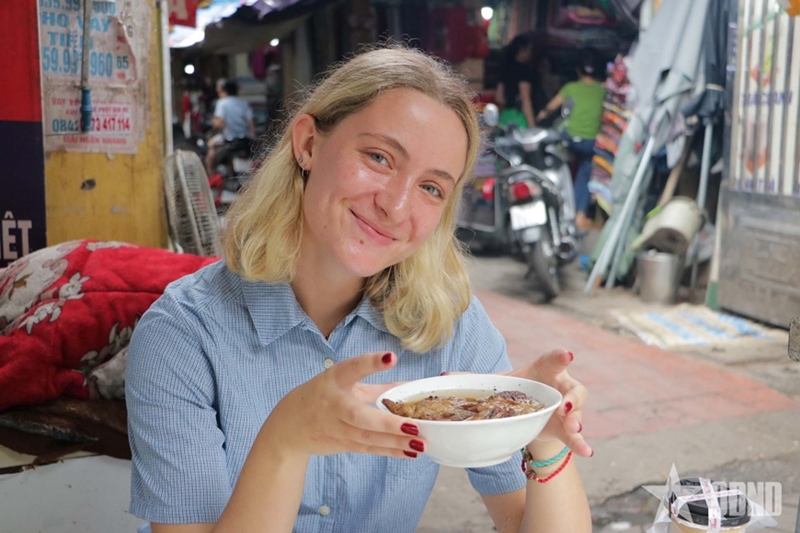
Hannah Gordon, a preschool teacher from South Africa, said she was especially impressed by the way Vietnamese cuisine blends different flavors together. Before moving to Vietnam nearly two years ago, she had rarely tried Vietnamese food because there were almost no Vietnamese restaurants in her hometown.
    |
 |
|
Hannah Gordon now considers fish sauce a familiar part of her daily meals in Vietnam. |
“I love the combination of so many different flavors, and it is exciting to experience local dishes,” Gordon shared. She admitted that fish sauce initially felt too strong for her, but over time it became an essential part of her daily meals. “You can already enjoy the dish as it is, but once you add different condiments, everything becomes even more vibrant. That’s the magic of Vietnamese cuisine,” she said.
Ada, a tourist from the Netherlands, described Vietnamese food as the complete opposite of Dutch cuisine. “Food in the Netherlands is quite plain, while everything here feels rich and full of flavor,” she said, praising the skillful use of local spices that gives Vietnamese cuisine its distinct identity.
|
|
 |
|
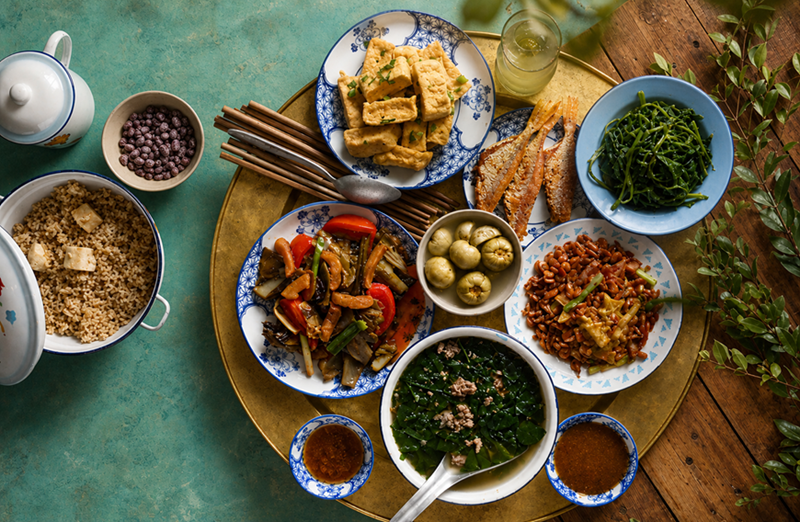
For many international visitors, each Vietnamese dish reflects a facet of local cultural identity. |
Perhaps that is why, for many international diners, Vietnamese cuisine goes far beyond the simple idea of being “delicious.” It is a symphony of harmonious flavors where richness never feels overwhelming, and balance never diminishes individuality, turning every meal into a distinctive culinary journey.
Beyond flavor, many visitors believe Vietnamese food reflects the country’s culture, people and history. Dohui Kwon from the Republic of Korea said cuisine reveals the personality of a nation, adding that Vietnamese flavors are part of what makes the country so appealing. Similarly, Cao Yuhao from Taiwan (China) viewed Vietnamese cuisine as a cultural heritage rather than simply food.
|
|
 |
|
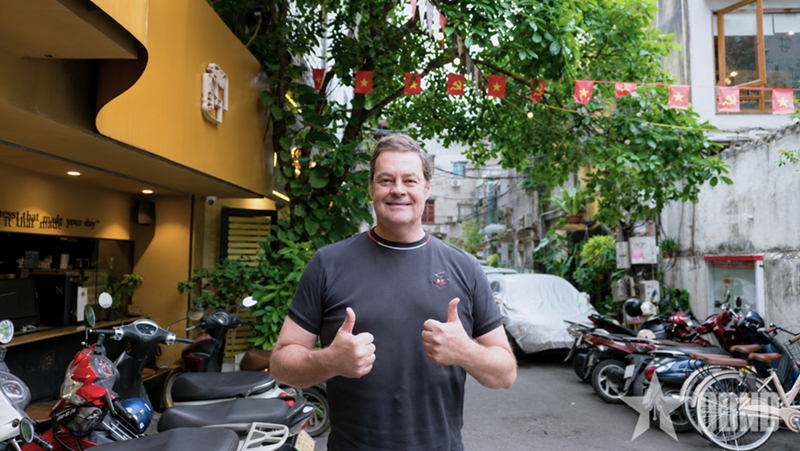
Bradley Corbett from Canada has lived in Vietnam for nearly six years, experiencing its culinary culture firsthand. |
For Bradley Corbett, a Canadian who has lived in Vietnam for nearly six years, the most remarkable aspect of Vietnamese cuisine is its balance. “Vietnamese people are truly masters of balancing flavors,” he said. In his view, the harmony between main and side dishes, strong and subtle tastes reflects the Vietnamese way of life that is flexible, adaptable and deeply creative through hardship.
“When I think about Vietnamese cuisine, I think about the people,” Corbett noted. “Even in the most difficult times, they found creative ways to use simple ingredients and turn them into something refined.”
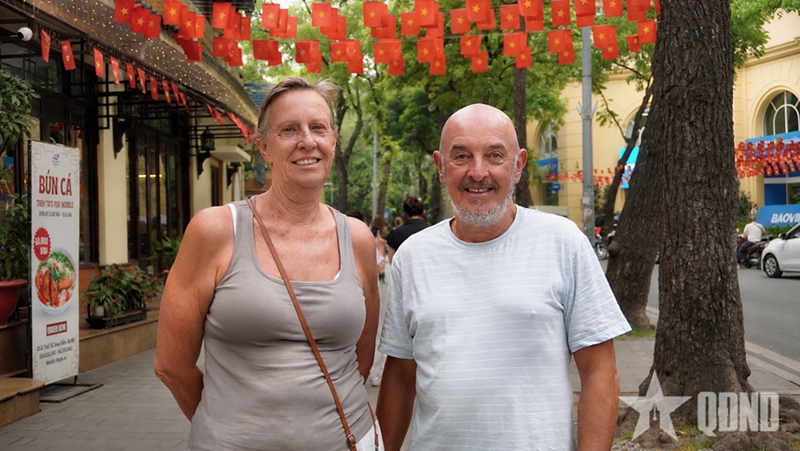
For many visitors, Vietnamese food is also closely tied to memory and emotion. Joycelyn and Glen, an Australian couple who have visited Vietnam six times over the past 20 years, said cuisine has become one of the strongest connections drawing them back to the country.
|
|
 |
|
Over the past two decades, Joycelyn and Glen, an Australian couple, have visited Vietnam six times. |
“Whenever we eat Vietnamese food at home, it brings back memories of our experiences in Vietnam,” Joycelyn shared. “The aromas and flavors remind us of the places we love and the moments we shared together in this beautiful country.”
Hannah Gordon added that meals and coffee gatherings in Vietnam helped create connections with friends and local people. “Vietnamese cuisine really brings people closer together,” she said.
For many international visitors, Vietnamese cuisine has become far more than food. Through every dish, they discover culture, history, creativity and human connection, turning Vietnam from simply a destination into a lasting memory.
Translated by Mai Huong