According to the Plant Production and Protection Department under the Ministry of Agriculture and Environment, improved crop varieties have increased yields by 8–15%, depending on the crop, while enhancing farmers' incomes and supporting the restructuring of the agricultural sector.
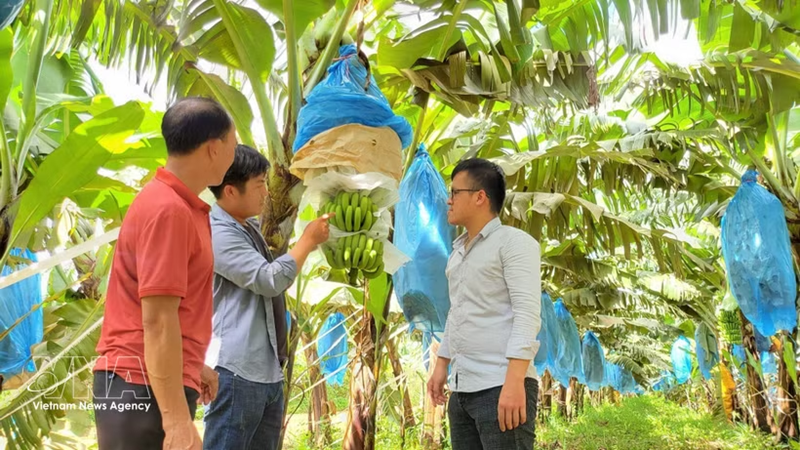
The benefits are already evident in production. In Gia Lai province, An Thinh Khang-Farm Agriculture JSC has adopted tissue-cultured banana seedlings across its plantations, allowing for uniform cultivation, higher-quality fruit and synchronized harvesting. Its bananas are now exported to demanding markets such as Japan, the Republic of Korea and the Middle East.
    |
 |
|
A banana plantation cultivated to standardized production practices by Hung Son High-Tech Agriculture JSC in An Phu ward, Gia Lai province |
Son La province has also transformed its fruit industry by introducing a wide range of high-value varieties, helping establish the province as the largest fruit-growing region in Northern Vietnam and a major exporter of agricultural products.
Deputy Director of the Plant Production and Protection Department Nguyen Quoc Manh said Vietnam has made significant progress in crop breeding by applying modern technologies such as molecular biology, tissue culture and DNA sequencing, shortening breeding cycles and producing varieties with higher yields, better quality and stronger resilience.
He added that Vietnam is gradually mastering next-generation breeding technologies, particularly gene editing, creating opportunities to develop crops better adapted to climate change and changing consumer demand.
Despite the progress, the sector continues to face challenges. Tran Xuan Dinh, Vice Chairman and Secretary General of the Vietnam Seed Trade Association, said cumbersome procedures for testing and approving new varieties, outdated technical standards and delays in updating regulations have increased costs and slowed the commercialization of scientific advances.
He also noted that investment in research remains limited, while stronger protection of plant breeders' intellectual property rights is needed to encourage innovation.
Chairman of ThaiBinh Seed Group JSC Tran Manh Bao called for broader incentives for research and development, improved access to testing facilities and farmland, and expanded public-private partnerships, under which the State would invest in basic research, genetic resources and shared infrastructure while enterprises focus on applied research and commercialization.
Director of the Plant Production and Protection Department Huynh Tan Dat said businesses play a central role in innovation and the commercialization of research outcomes. He said the agriculture sector will continue refining policies to encourage long-term private investment in crop breeding, strengthen intellectual property protection and promote the application of advanced technologies such as gene editing, artificial intelligence, big data and digital transformation.
Source: VNA