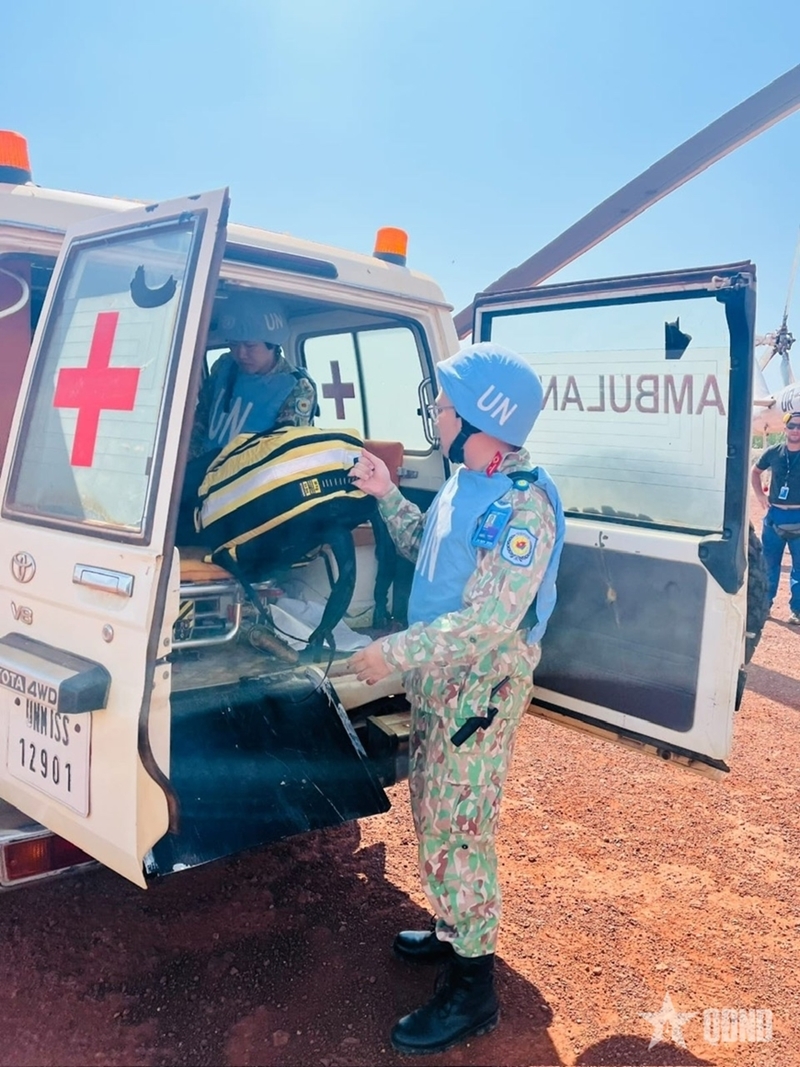
A medical evacuation order was sent to Viet Nam’s L2FH Rotation 7 in the Northern Sector, requesting the urgent evacuation of two Bangladeshi military personnel who had been stung by wild bees while on duty in Warrap state, in the Western sector, and their transfer to a medical facility.
    |
 |
|
Urgently setting out to perform the mission |
Immediately after receiving the order, the Air Medical Evacuation Team (AMET) set out. The team comprised Major Pham Cong Tinh and non-commissioned Major Thai Van Hieu. Carrying emergency medical equipment and medications, the two boarded a U.N. Mission helicopter to Majak helipad, where they received the two Bangladeshi personnel and transported them directly to China’s L2FH in Wau.
Thanks to timely medical assistance and evacuation, the health of the two Bangladeshi personnel soon stabilized. They have since recovered and been transferred to an L1FH for further monitoring.
The ability to respond rapidly, close coordination between the Western sector and the Force Headquarters in Juba, and the strong professional capabilities of the AMET and L2FH Rotation 7 all contributed to the successful completion of the mission.
|
|
 |
|
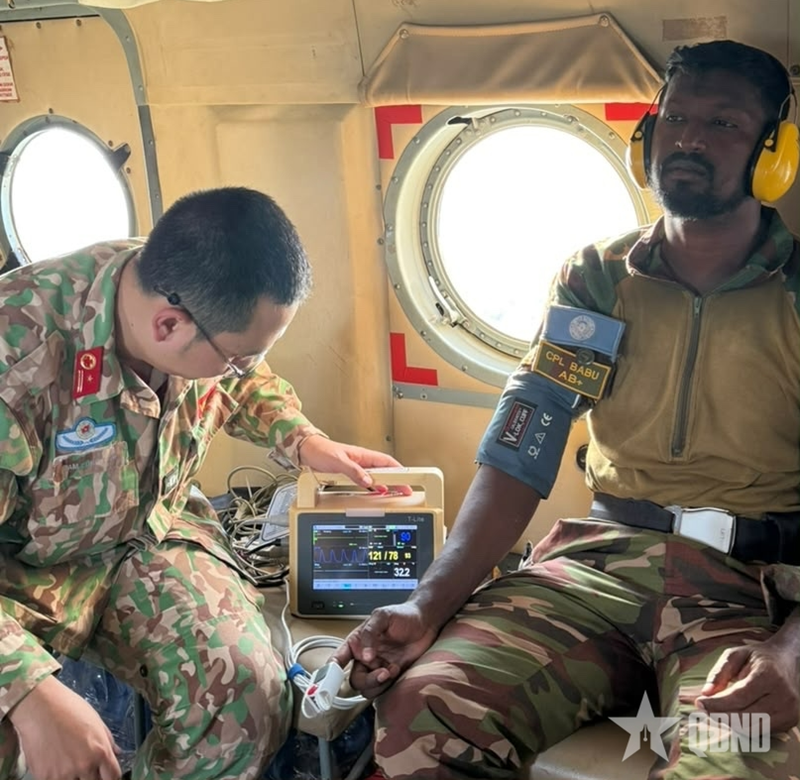
The two Bangladeshi military personnel receive medical care throughout the flight. |
In Wau, upon receiving an initial report from observers accompanying a patrol that had been attacked by a swarm of African wild bees, Col. Luong Truong Vinh, a Vietnamese People’s Army officer serving as Chief of the Military Observers Office in the Western sector, immediately directed forces under his command to remain at the scene, verify the situation, and accurately report the personnel’s coordinates and injuries. He personally assessed the situation and forwarded the report to the Western sector Headquarters and the Force Headquarters in Juba, together with a request for an urgent air medical evacuation. He also directed that the two Bangladeshi personnel requiring evacuation be taken to Majak helipad and prepared for handover.
When located and found, the two personnel were conscious but extremely fatigued. Each had approximately 20 to 30 bee stings, mainly on the arms, shoulders, neck, head and face. The medical team assessed both as showing signs of Grade II anaphylaxis, checked their airways, breathing and circulation, and carried out stabilization measures before they were loaded onto the helicopter. Their conditions were closely monitored throughout the flight.
|
|
 |
|
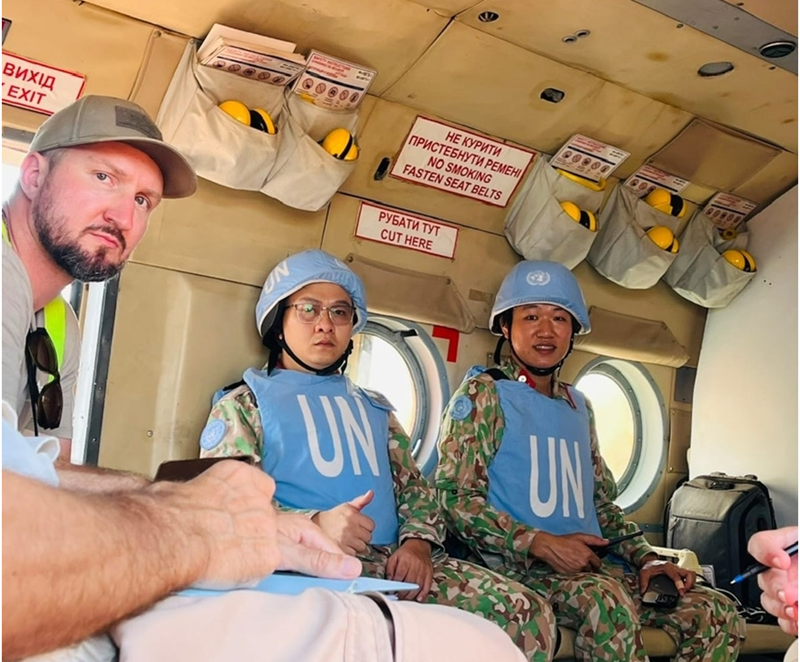
Major Pham Cong Tinh and non-commissioned Major Thai Van Hieu (seated on the right) perform their duties during the special flight. |
While the first medical evacuation team was still in Wau, L2FH Rotation 7 received two additional cases requiring evacuation: one patient with peritonitis caused by appendicitis and another with prolonged infectious fever. Another air medical evacuation team from the hospital was assigned to transfer the patients to a Level-2-plus hospital on a special flight.
The AMET has six members under its official staffing structure. However, during training in Viet Nam, 17 hospital officers and personnel received training in emergency care and air medical evacuation and obtained international certification. As personnel were dispersed during the rotation handover period, these trained personnel were able to step in promptly and effectively take over emergency duties.
In the final days of their U.N. peacekeeping mission, the Vietnamese blue beret military medical personnel added a distinctive mark of responsibility and professional expertise by carrying out two emergency evacuation flights despite operating with limited manpower.
Having completed the final missions of their rotation, the medical personnel of Viet Nam’s L2FH Rotation 7 concluded a successful assignment with the UNMISS. They safeguarded the lives and health of patients under all circumstances, upholding the tradition of Uncle Ho’s soldiers, and leaving a positive impression on their international colleagues.
Translated by Quynh Oanh